
LatAm Tech Weekly
#203: My take on the 2025 Latin America Digital Report by Atlantico, deals of the week and much more!

Weekly writing about what is happening in LatAm tech. By day, I lead the business development team at Itau Unibanco. By night, I am reading and learning about technology in general (now, with a focus on AI). During the weekends, I’m writing the LatAm Tech Weekly.
If you have not subscribed yet, join the 13,600+ weekly readers by subscribing here!
Happy Sunday!
São Paulo Tech Week 2025 flew by, and suddenly we’re already in mid-September. I didn’t make it to as many gatherings as I would have liked because of agenda conflicts, but I want to take a moment to congratulate everyone who made this week possible.
This edition was extra special: Cubo Itaú celebrated its 10-year anniversary! Congrats team! Also, Atlantico released its Latin America Digital Transformation Report—the much anticipated 178-page X-ray of the region. While I could easily drop the report into ChatGPT for a quick (and very good) summary, this is the kind of material I prefer to read cover to cover.
So without further ado, here’s my take on the report—straight from me, no AI involved. Hope you enjoy it!
Follow me on LinkedIn , Instagram or X for daily updates!
Opinions expressed here are solely my own and does not represent those of people, institutions, organizations that I may or may not be associated with in any capacity, unless explicitly stated.
ATLANTICO’S LATIN AMERICA DIGITAL TRANSFORMATION REPORT - 2025
THE END OF FRICTION
TLDR version (thank me later)
Like our ancestors — the Incas reading quipus or scribes decoding clay tablets — I too sat down to read Atlantico’s Latin America Digital Transformation Report 2025 cover to cover (178 pages!). And yes, I did it without ChatGPT, because sometimes you just want to learn the old-fashioned way.
A few highlights that stood out to me:
Macro context: $7T economy, 700M people, 5.4% GDP CAGR (2019–2024). Brazil’s rates at 15% and Mexico’s at 8% sound attractive, but FX depreciation over 15 years shows why foreign flows don’t always match local returns.
Energy: Brazil’s >85% clean energy matrix is a hidden gem as AI drives record demand for power and data centers.
Digital adoption: Brazilians spend 9+ hours online daily; WhatsApp is the region’s digital gravity center. E-commerce is frequent, but low ticket size = big upside.
AI: 30% of startups are AI-native, 41% AI-enhanced, and 22% AI-assisted. Founders expect headcount efficiency gains, while Brazil is already a top 3 ChatGPT market.
Capital & returns: LatAm venture funds have, on average, outperformed global peers (with caveats on sample size). Dry powder is building, but exits remain tough with 39 companies stuck pre-IPO.
Fintech revolution: In Brazil, bank branches down 25% since 2018; POS devices up 963% since 2008; fintech credit volumes up 3.7x (2019–2022). Pix is now bigger than cards. Mexico, meanwhile, still fights friction through concentrated banking, regulation, and low bancarization.
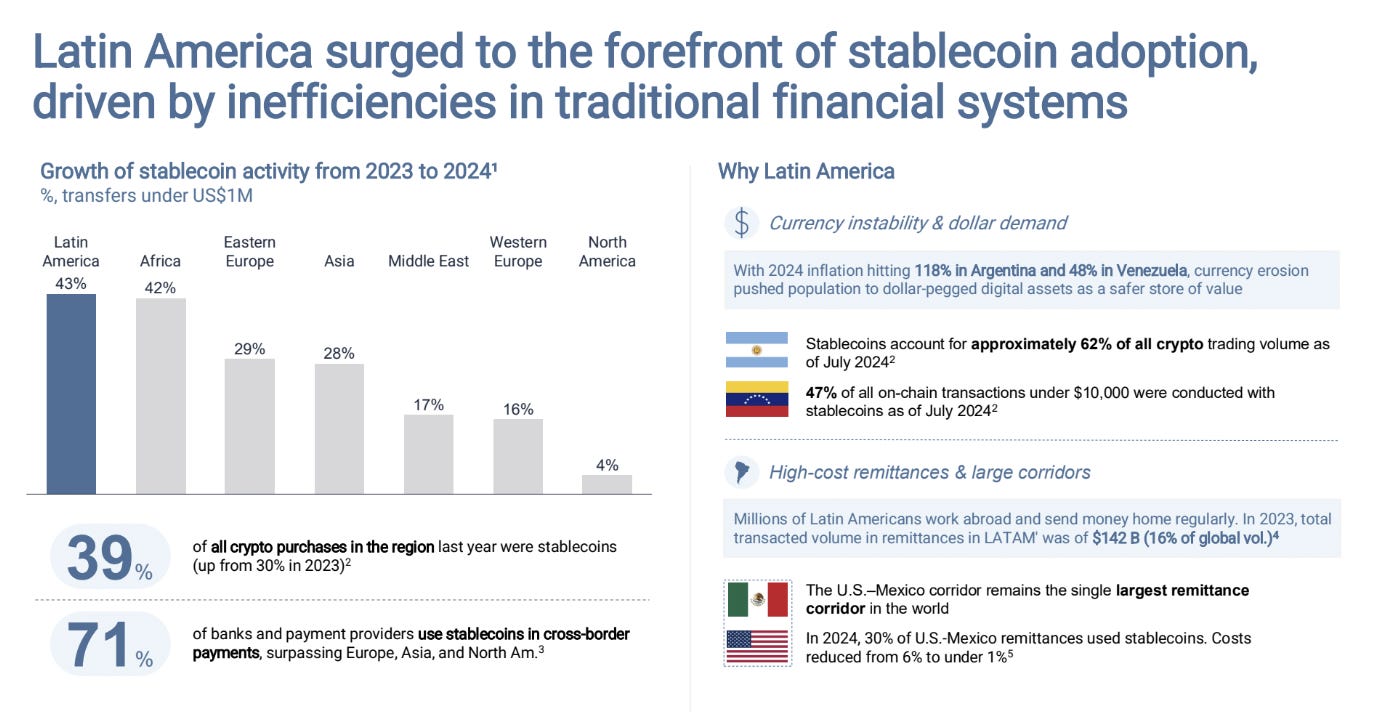
Next frontier: Stablecoins are emerging as a real alternative across the region.
My takeaway? Despite volatility, LatAm’s unique combination of scale, digital adoption, and clean energy positions it as a magnet for capital — not just in venture, but in AI infrastructure and financial innovation.
FULL SUMMARY
We all know Latin America carries its share of challenges—political turbulence, regulatory twists, and economic uncertainty that often weigh on innovation and growth. Yet every so often, those headwinds quiet down—or at least fade into the background. That’s the moment we’re living right now.
The Current State of LatAm
7 trillion economy; 700M people, 5.4% compound annual GDP growth (2019-2024)
Interest rates in Brazil are at 15% and in Mexico 8%. While local currencies have generally appreciated against the USD this year, looking over a 15-year window they have in fact depreciated. This implies that, for foreign investors, the high nominal rates may not fully translate into dollar-denominated returns once FX erosion is accounted for.
U.S. tariffs affect the region, but China is also seen as a source of risk by the population.
On the energy side (very important due to the high necessity of power driven by AI) Brazil boats 85%+ clean, diversified and stable energy matrix.
Internet usage outpaces U.S. and China, with the average Brazilian spending more than 9 hours in the internet - mainly as a tool for information gathering. On the social media front, roughly 98% of internet users 16+ of age use a type of social media. WhatsApp is the center of gravity.
Latin Americans are high frequency online shoppers - but the average ticket is still low, suggesting room for growth in the space.
Artificial Intelligence
Every AI inference converts directly into an energy expense. As token volumes surge, the resulting load is driving record investment in data center infrastructure, reshaping global capex priorities and fueling a new wave of capital flows into energy and compute. For Latin America, with its abundant renewable resources and increasingly competitive power markets, this shift positions the region as a potential magnet for global capital seeking efficient, scalable, and sustainable data center expansion.
Productivity = GDP growth. The lower growth rate of LatAm (when compared to the U.S., for example) could mean that there is untapped catch-up potential - that could thus be fueled by the need for energy due to AI.
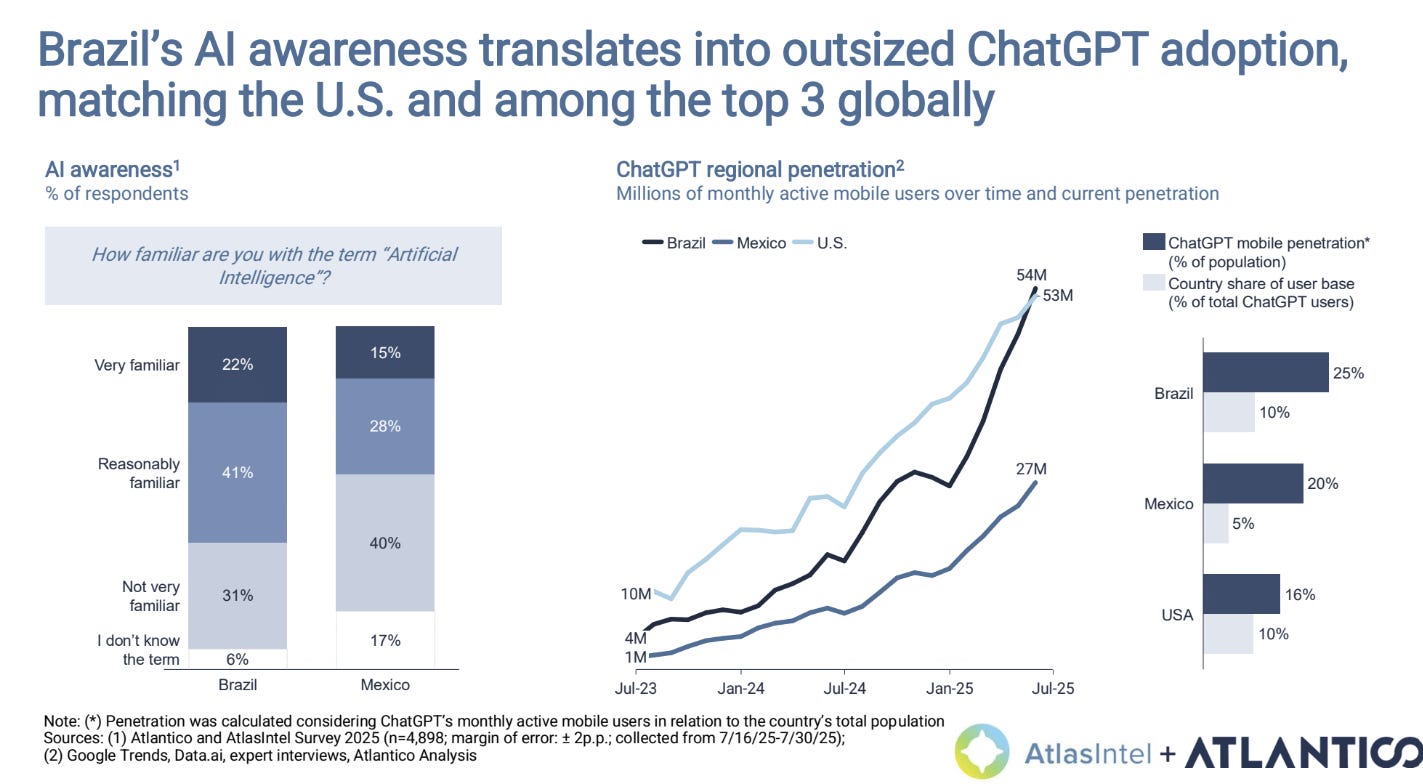
Brazil is a top 3 market for Chat GPT - and it has become part of everyday life. However, expectations regarding the impact of AI on society and labor has been muted.
LatAm founders report a high level of AI adoption: 30% AI native, 41% AI enhanced, 22% AI assisted. The majority of founders believe that AI will reduce startup headcount by 21%-30%.
Financial & Human Capital
Capital and people operate as a flywheel - one amplifies the other when they are aligned.
LatAm Venture returns have put the region on the map as a destination of robust returns.
Latin America has stabilized post the 2021 peak - data indicates somewhat of a modest shift to early-stage round for local funds and recent growth in Mexico’s share.
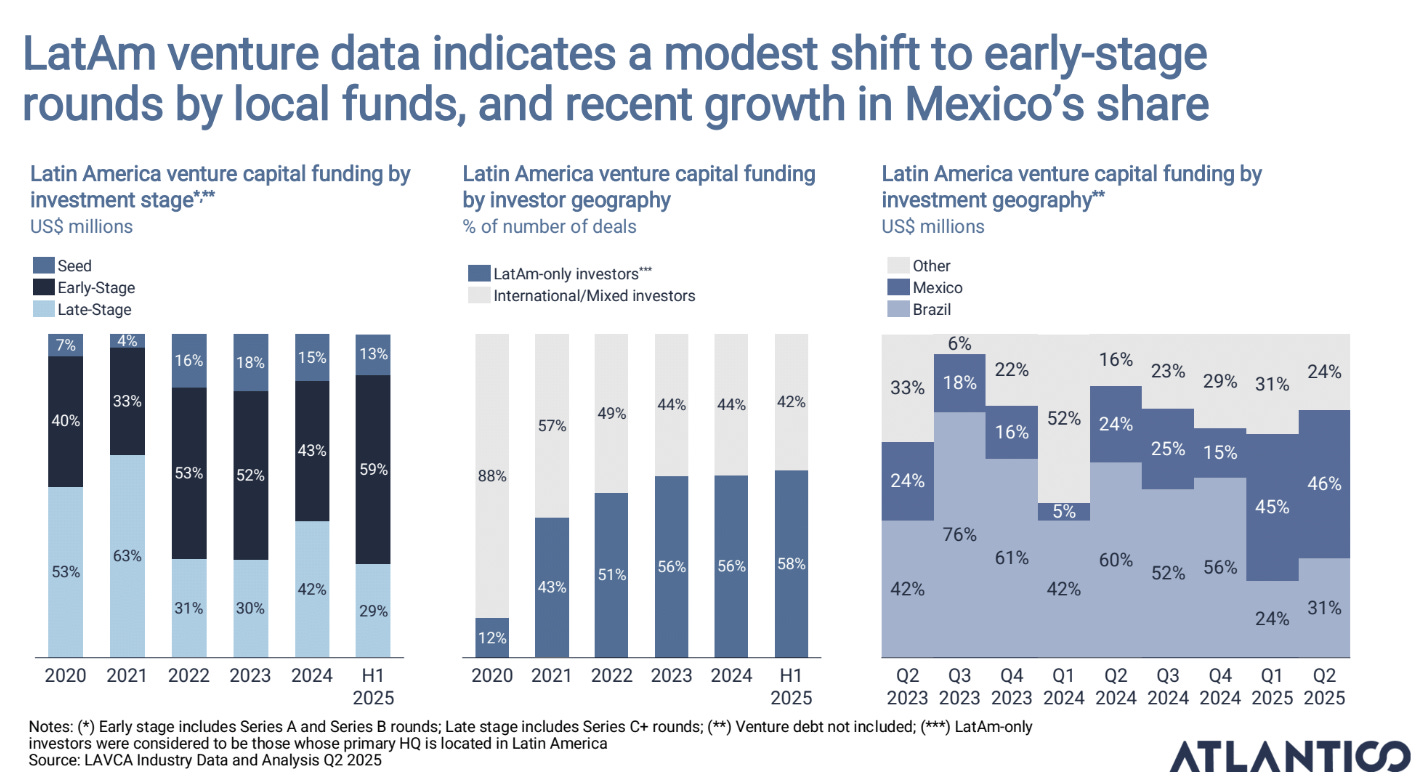
Despite the drop in deal size, median check size overall has been increasing, reflecting investor’s selectivity. The deal that is done - is done with certainty.
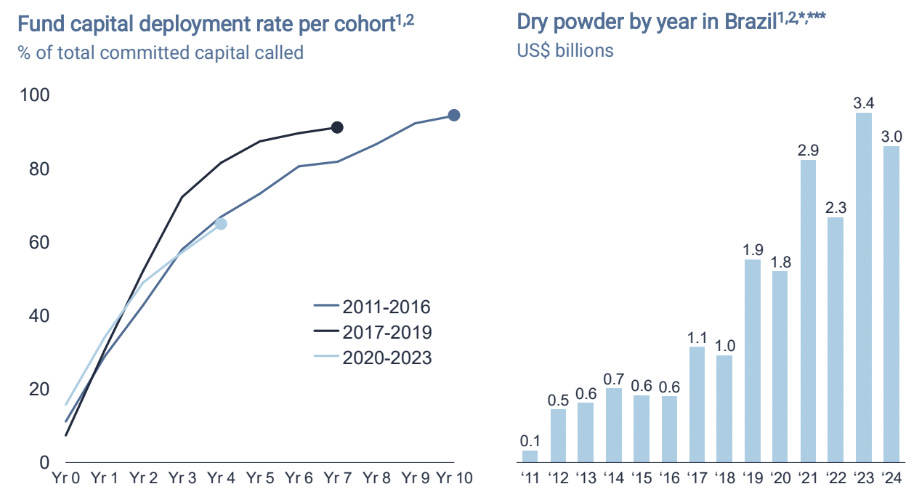
On the GP side, raising a new fund is challenging. However, slower investment pace has led to a rise in dry powder.
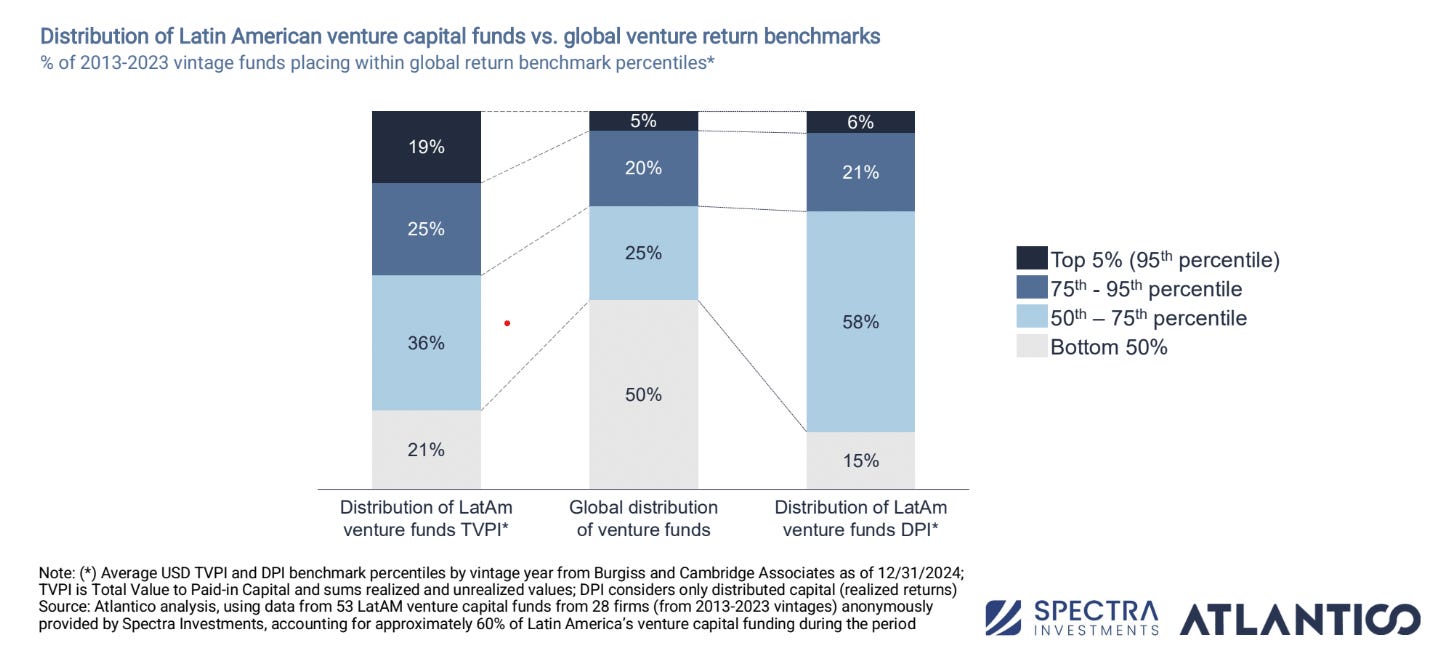
According to a study conducted by Spectra and Atlantico, LatAm venture funds have outperformed their global peers on both realized and unrealized returns. It is important to note, however, that the global dataset includes hundreds of funds, while the LatAm sample covers just 53 vehicles across 28 firms. This could imply that the outperformance is at least partly a reflection of sample bias, survivorship effects, or a higher concentration of top-tier managers rather than a broad structural advantage. That said, it remains an interesting signal of how a relatively young ecosystem can generate competitive returns despite its smaller scale.
LatAm tech penetration has grown exponentially in the last 20 years - and should have 20+ years of compounding ahead. On the flip side, LatAm is facing a tough IPO scenario, creating a backlog of 39 pre-IPO late stage companies.
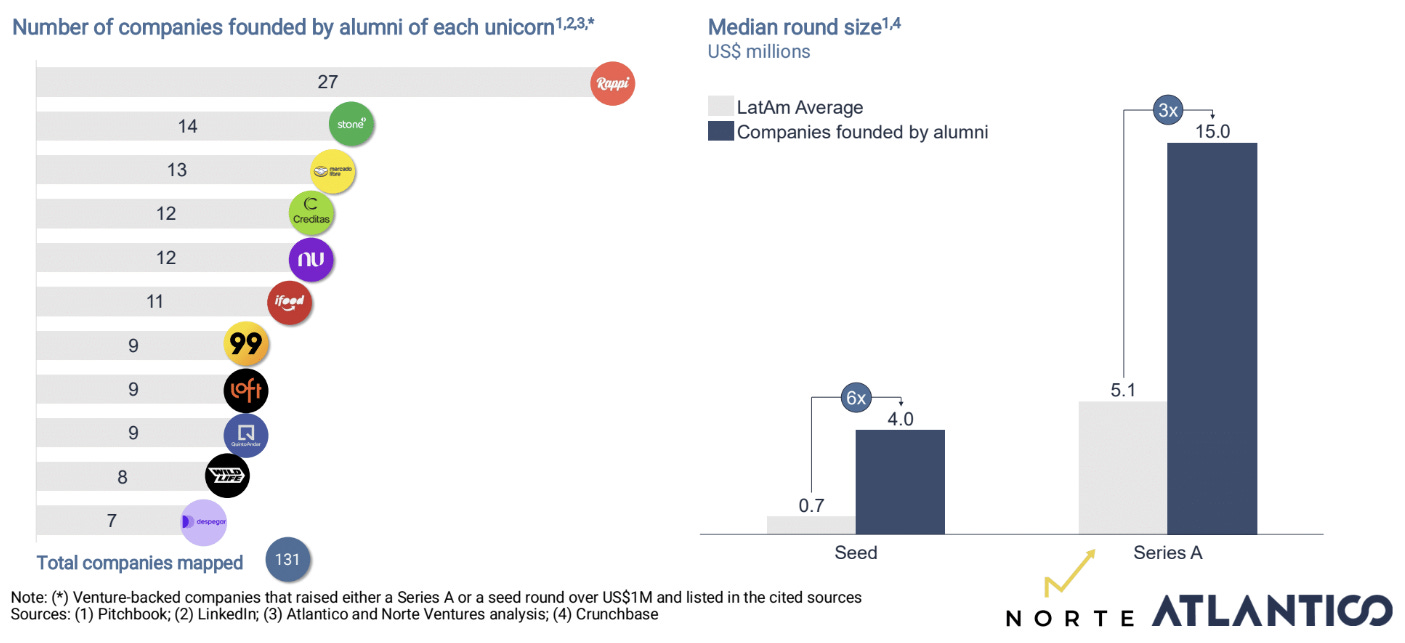
Similar to the U.S., companies founded by “unicorn alumni” attract more capital- creating the so-called “mafias”
Due to a tougher environment, startups of all stages now hold 2+ years of cash.
Who are the LatAm startup CEOs?
The Atlantico team interviewed 100+ Founders/CEOs, with 140+ companies founded, from 11 different countries.
88% are men (no comments here…)
They grouped them in 5 different types (which I thought made a lot of sense)
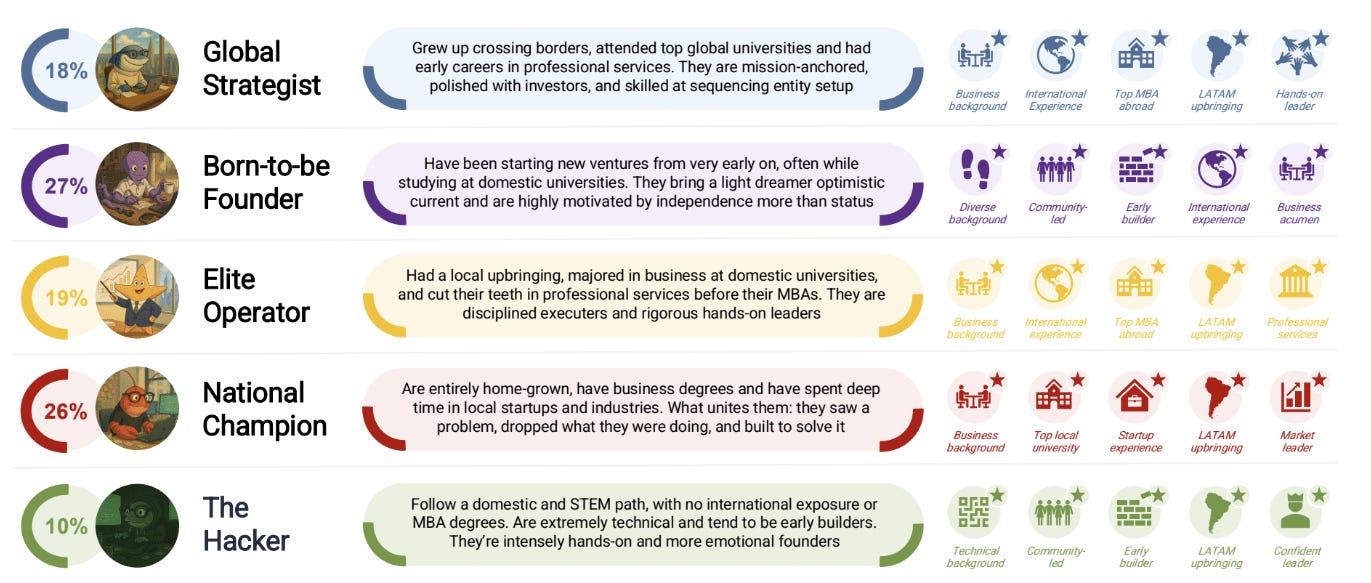
Overall, qualities that are part of every type above: hard work, empowering leadership, emotion and empathy.
Fintech, fintech, fintech
Brazil is making the most with reduced friction due to Brazil`s Central Bank regulations that fuel competition.
Number of bank branches fell from over 21k to around 16k (2018–2024), a ~25% decline.
In Class A/B, digital-only or hybrid (digital + physical) users rose from 51% to 62% (2022–2024); in Class C, from 43% to 55%; in Class E/D, from 30% to 53%.
POS devices reached 34MM in 2024, a 963% growth from 2008.
MDR fell to 1.1% and 2.2% in debit and credit cards, respectively, in 2024, a 31% and 24% reduction versus 2014.
Total receivable volumes surged 8x since 2021, with discount rates more aligned to the base interest rate.
Number of credit fintechs rose from 11 to 130 (2019–2024).
Total credit volume from credit fintechs grew from R$78B to R$291B (2019–2022), a 3.7x increase.
Fintechs’ share of total credit grew from 0.3% to 0.8%. Digital banks’ share of total credit grew from 1.9% to 4.6% (2019–2022).
PIX has already surpassed “cards” and “others” as means of payment
1/3 of the Brazilian population has provided consent to data sharing in the context of Open Finance
Mexico is building around friction
High concentration, heavy regulation - generating distrust
low bancarization - leading to retailers gaining relevance to offer financial services
still, companies like Cobre emerge in the middle of cash dominance and labor informality
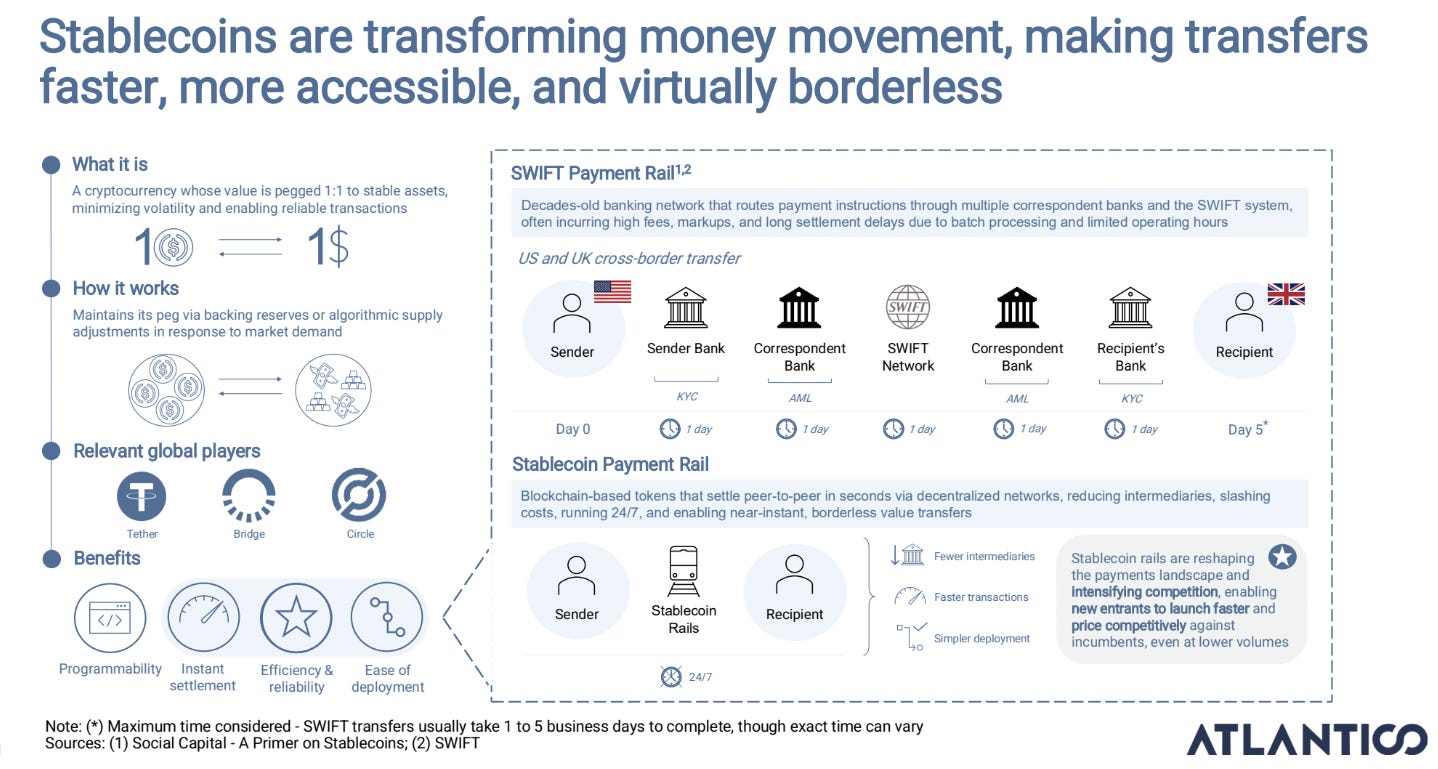
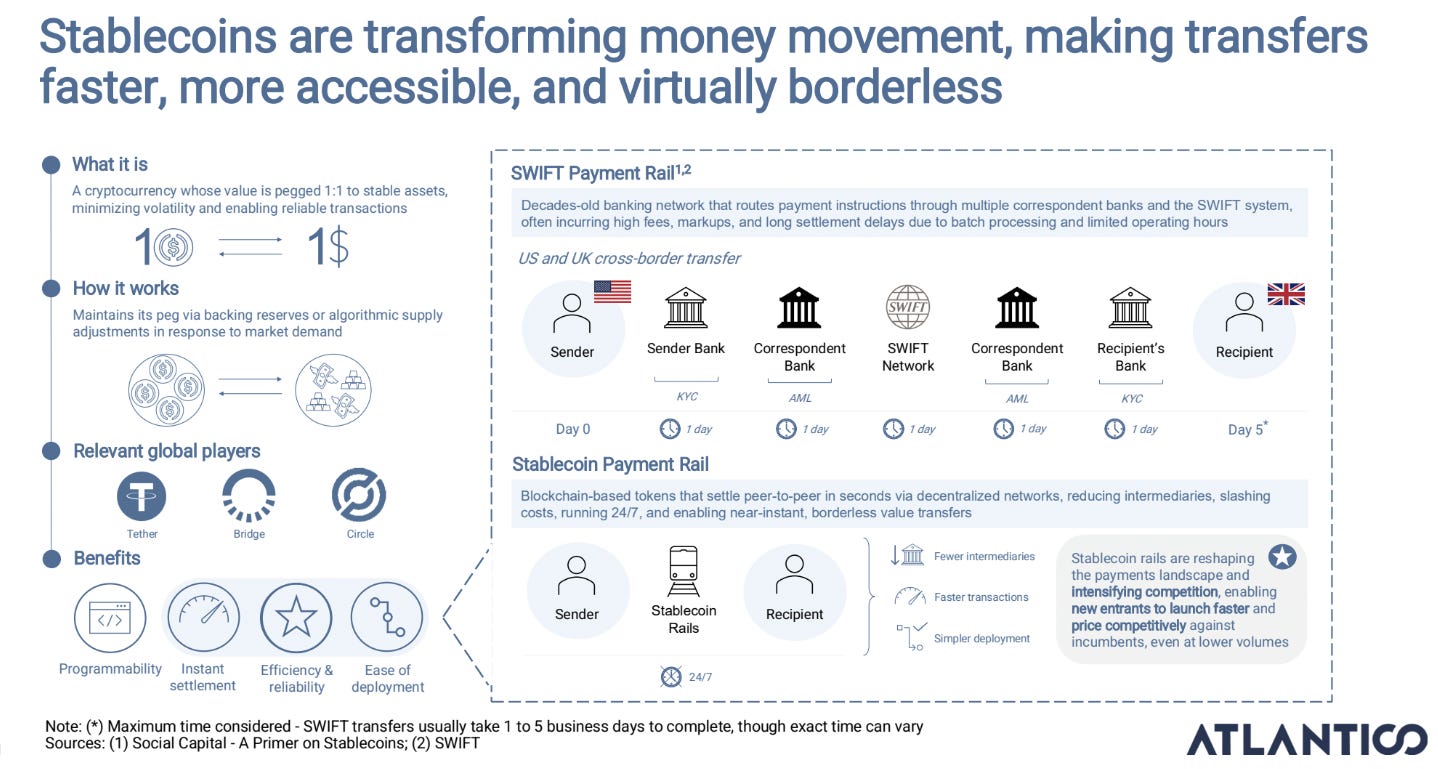
Stablecoins are definitely the next frontier


General news:
CB Insights’ Smart Money VCs 2025 highlights the 25 most influential funds of the past decade, which show 6.5× higher odds of backing unicorns and 2.2× more exits than peers. These firms—such as a16z, Sequoia, General Catalyst, and Redpoint—also lead rounds 2.3× more often. Since 2015, they’ve invested in 80+ companies that exited above $10B, from Uber to Coinbase. In 2025, they dominate AI, backing 75% of new AI unicorns. 🌎
Porto Maravalley in Rio will launch a health-focused innovation hub through a partnership with the city, Fiocruz, and Iniciativa FIS. The initiative will connect hospitals, pharma, startups, and the SUS, creating 600 jobs and expanding Rio’s innovation verticals in smart cities and AI. 🇧🇷
Google rolled out AI Mode in Portuguese for Brazil, powered by Gemini 2.5 and integrated into Search on web and mobile. The tool supports multi-step queries in a single interaction and allows multimodal input (text, voice, images). Results prioritize linking back to original sources, making Brazil part of Google’s global AI search rollout. 🇧🇷
Deals:
Amazon has reportedly acquired a stake in Colombia’s Rappi via a $25M convertible note investment at a $2.25B valuation—half its 2021 peak. Rappi, an AWS client, already offers Amazon Prime perks in Mexico and holds ~40% of the local delivery market. Amazon could increase its stake to 12% if milestones are reached, strengthening its competition against Mercado Libre. 🇨🇴
GestãoDS, a Brazilian healthtech, raised R$2.5M in partnership with CESAR, with Embrapii funding half. The deal aims to build AI agents for clinics and medical offices. Founded in 2016, GestãoDS now serves 15k users and is valued at R$60M. 🇧🇷
Bugster, an Argentinian startup, raised $300K from 500 Global to scale its AI-powered software testing platform. Operating in the US, Mexico, Colombia, and Australia, Bugster is now eyeing Silicon Valley. Its platform detects regressions in minutes, aiming to serve 150M developers worldwide. 🇦🇷
Ume, a Brazilian fintech founded in 2019, raised a $21.8M Series B led by Valor Capital and Bewater. Its credit and payments platform enables 6,000 retailers to run banking-like operations with AI-driven credit scoring, collections, and Pix integration. Ume, backed by PayPal Ventures, NFX, Globo Ventures, Canary, and Big Bets, targets $1B GMV in 2025 and plans to expand beyond retail into sectors like travel and energy. 🇧🇷
Gabriel, a Brazilian surveillance startup, raised R$60M to expand into new capitals. The round included R$35M in equity from Astella, Qualcomm, and Alter Global, plus R$25M in debt maturing in 2029. With 14k cameras in São Paulo and Rio, Gabriel helps resolve ~30 crimes per day, supporting nearly 10k police cases. 🇧🇷

General news:
RankMyApp reports that traditional banks still lead in user engagement, with higher daily and monthly active users than digital banks. Despite perceptions that neobanks deliver more attractive experiences, incumbents outperform in stickiness, usability, and integrated services. Fintechs and wallets see spikes from promotions but struggle with loyalty. The study underscores that trust, breadth of services, and consistent engagement matter more than downloads alone. 🇧🇷
Lyra integrated with Kamin to enable real-time P2M transactions, aligned with the launch of Bre-B by Banco de la República. The system supports large platforms and SMEs with instant and interoperable payments, omnichannel support, scalability, and traceability. The initiative aims to drive financial inclusion and digital commerce growth. 🇨🇴
GrabrFi launched international Mastercard debit cards in Colombia, complementing its no-fee USD current accounts. The cards allow freelancers, entrepreneurs, and digital nomads to receive payments from platforms like Airbnb, Upwork, and PayPal without fees. Already processing $15M monthly in 27+ countries, GrabrFi has opened 10k accounts in Colombia. 🇨🇴
UBS, after absorbing Credit Suisse’s Brazil operations, is investing in regional wealth management expansion and weighing acquisitions. Focused on UBS Consenso, where custody isn’t bank-tied, UBS sees opportunities in Brazil’s fragmented market and pressures facing multifamily offices. 🇧🇷
Finsus is close to becoming a licensed commercial bank, with regulatory filings complete. With profitability achieved, 16B pesos in deposits, and 500k clients, the digital lender is planning an IPO in Mexico, New York, or London within 2–3 years. 🇲🇽
Atlantico and Norte Ventures reveal that “tech mafias” are booming in LatAm, led by alumni of Rappi, Stone, and Mercado Libre. Rappi alumni alone founded 27 startups, raising larger rounds thanks to global credibility and proven playbooks. With $3B in dry powder, VC is primed for the next wave of unicorns. 🌎
Brazil’s green transition could add $230B–$430B to GDP and create up to 10M jobs by 2030, according to a new task force report. Unlocking this requires $130B–$160B in annual investment. Key chains include biofuels, EVs, circular plastics, superfoods, and data centers. The report, to debut at COP30, positions Brazil as a global leader in profitable ecological transformation. 🇧🇷
Visa unveiled an AI-powered credit platform that assesses SME financial health in real time, using its global transaction data. Tests in Mexico and the US showed defaults down 30% and approvals up 15%. A Brazil launch in 2026 could unlock billions in SME financing. 🌎
Deals:
wehandle, a Brazilian contractor management startup, raised R$36M in a round led by Canary with ONEVC, Valutia, Blustone, and Quartzo. Serving clients like Globo, Unilever, DHL, and Coca-Cola, its AI-driven platform cuts compliance and risk processes from 60 days to 48 hours. Funds will support expansion in Brazil and a pilot in Chile. 🇧🇷
Kamino, a Brazilian fintech serving 2,000+ clients and processing R$15B, raised R$54M in a round co-led by Flourish Ventures and Quona Capital with Endeavor Catalyst. The company is building AI-powered CFO tools to become the financial OS for Brazil’s mid-market. 🇧🇷
Osigu, a Miami-based healthtech active in LatAm, raised $10M from Eos Ventures to modernize healthcare payments. Backed by Visa and IDC Ventures, the oversubscribed Series B will fund scaling across insurers, providers, and patients. 🇺🇸 🌎
Banorte agreed to sell its digital bank Bineo to Clearscope Holdings, part of Klar Holdings. Launched in 2024 with $150M invested, Bineo underperformed and entered restructuring in 2025. By June, it held just 3.26B pesos in assets. The sale, pending approvals, reflects Banorte’s strategy to consolidate digital resources. 🇲🇽
PrecPago, a Brazilian fintech specializing in judicial asset advances, added Banco Mercantil as a minority shareholder. With R$500M already anticipated across 3,000 operations, PrecPago targets R$1B in three years. Mercantil’s 9.1M clients align with this focus, particularly older holders of precatórios. 🇧🇷

General News:
Itaú Emps introduced generative AI to simplify access to Pronampe credit for small businesses. Embedded in its app, the tool helps clients submit data and simulate credit, aiming to reduce bureaucracy and boost SME financial inclusion. This is among the first applications of GenAI in Brazilian SME credit. 🇧🇷
Western Union and dLocal partnered to integrate local payment methods like Pix, cards, and digital wallets into Western Union’s channels across Latin America. Covering Brazil, Mexico, Chile, Argentina, Panama, and Peru, the initiative aims to lower remittance costs, speed transfers, and improve user experience. With remittances reaching $161B in 2024, the deal strengthens Western Union’s digital strategy while leveraging dLocal’s expertise. 🌎
HuNIm, founded in 2022, supports Indigenous entrepreneurs and socio-environmental businesses in the Amazon. Focused on entrepreneurship, bioeconomy, and regenerative innovation, the hub already supports seven ventures in fundraising, market access, and impact strategy. Backed by Sebrae and major innovation events, HuNIm aims to unite cultural preservation with economic development. 🇧🇷
Brazil is set to welcome Oranje, a bitcoin investment company preparing to go public on B3 via reverse IPO. Following MicroStrategy’s playbook, Oranje already holds more than triple Méliuz’s 605 BTC and aims to become LatAm’s largest bitcoin treasury. Founded by ex-Swan Bitcoin executive Guilherme Gomes, the move gives institutions equity-based bitcoin exposure. 🇧🇷
Larry Ellison surpassed Elon Musk as the world’s richest person with a $393B fortune after Oracle shares surged 41% in a single day, adding $101B to his wealth—the largest daily increase ever tracked. Oracle stock is up 45% in 2025 on soaring cloud and AI infrastructure demand. At 81, Ellison now tops Bloomberg’s billionaire index, underscoring tech’s dominance in an AI-driven economy. 🇺🇸
BAC launched Pyme Store BAC, a digital platform enabling SMEs to build online stores with integrated payments like Click Buy and Apple Pay. Already adopted by 16 businesses, the platform reduces costs and expands reach, while BAC continues to support 250k SMEs with credit and training. The initiative aligns with its Triple Value model, driving economic, social, and environmental impact. 🇬🇹
Brazil’s Central Bank signaled it won’t issue formal AI regulations for finance before late 2026. Instead, it prioritizes congressional legal clarity while balancing innovation and risk. A market survey on AI will guide a 2026 impact assessment. Meanwhile, stablecoin oversight and stronger cybersecurity standards remain top priorities. 🇧🇷
Deals:
Vivo Ventures invested R$35M in fintech Asaas, its largest check to date. The partnership targets synergies between Vivo’s 1.7M SMB clients and Asaas’ 220k businesses. Backed by BOND and SoftBank, Asaas raised a record R$820M Series C last year and operates as a licensed payment and credit institution. 🇧🇷
Klarna debuted on the NYSE, raising $1.37B at $40 per share. Shares closed 15% higher at $45.82, valuing the company at $17.3B. Once worth $45.6B, Klarna had fallen to $6.7B in 2022 amid inflation and rate hikes. CEO Sebastian Siemiatkowski’s 7.5% stake is now worth $1B, while Sequoia Capital turned its $500M bet into $3B. 🇸🇪 🇺🇸
PsiQuantum raised $1B in a Series E led by BlackRock, reaching a $7B valuation. Backed by Temasek, Baillie Gifford, Nvidia, Morgan Stanley, and QIA, the company is building large-scale quantum computing sites in Brisbane and Chicago. PsiQuantum’s photonic qubit approach aims to deliver fault-tolerant systems capable of solving industrial and governmental challenges. 🇺🇸 🇦🇺
Nebius is raising $3B to expand its AI-focused cloud business, just days after announcing a $17.4B partnership with Microsoft. The round includes $2B in convertible notes and $1B in equity, led by Goldman Sachs, Morgan Stanley, BofA, and Citigroup. Funds will boost data centers, energy-backed land, and GPU supply. Nebius shares are up 245% in 2025. 🌎
Oria Capital is raising its second secondary private equity fund, targeting $100M with a December close. Its first fund in 2018 delivered 3.3x returns and a 30% IRR after acquiring six Latin American tech assets from Intel. Oria focuses on B2B SaaS investments of R$20M–R$40M, aiming for 3–5x returns and providing liquidity in a tight IPO market. 🇧🇷
RS Solutions acquired Colibri, one of Brazil’s leading restaurant management software platforms, from NCR Voyix for R$100M ($18.5M). Serving 15k restaurants and processing R$28B annually, Colibri expands RS Solutions’ footprint in food service tech and opens cross-sell opportunities. 🇧🇷

General news:
Birdie is scaling as a global CX platform—8× growth in 2024 and already 3× revenue in 2025, with a target of 5× by year-end. Clients include Nubank, Natura, Magalu, Zé Delivery, Agibank, Koho (Canada), and Patreon (US). Beyond automation, Birdie pinpoints root causes of customer friction to cut churn and costs. It’s expanding in the US/UK, negotiating in Israel/Argentina/Mexico, nearing breakeven, and rolling out AI agents like “Sky” for executive decision-support. 🇧🇷
Google Cloud announced Trillium TPUs v6 in São Paulo, local hosting of Gemini 2.5 on Vertex AI and Google Distributed Cloud (including air-gapped options), and Agentspace for deploying corporate AI agents. Education/government bundles and training programs aim to reach 1M Brazilians, underscoring a deeper commitment to the country’s digital transformation. 🇧🇷
Oracle–OpenAI reports suggest a $300B multi-year cloud deal starting in 2027, tied to the $500B “Stargate” data-center project with SoftBank. Oracle shares jumped 36%, lifting Nasdaq and S&P 500 to records and propelling Larry Ellison to the top of global wealth rankings; neither company has officially confirmed the agreement. 🇺🇸
Brazil’s Central Bank issued Resolution 501, requiring institutions to block payments to accounts suspected of fraud (immediate effect; full compliance by Oct 13). The rule applies to all payment methods and updates Resolution 142. Critics cite ambiguity in institution-defined risk criteria; the BC mandates client notification when transactions are blocked. 🇧🇷
Deals:
Omie closed a $150M round led by Partners Group (including a $100M secondary for ~15% of the company), valuing the ERP SaaS at $700M. With ~180k clients and ~$600M ARR, Omie will invest in AI and new interfaces (e.g., WhatsApp) and targets R$1B in revenue within four years. 🇧🇷
Perplexity raised $200M at a $20B valuation—its second round in two months—bringing total funding to $1B+ in three years to cover infra and potential acquisitions (e.g., Sidekick, Carbon). 🇺🇸
CADE approved BR Link’s acquisition of Nextios’ cloud service contracts and the nextios.com.br domain (AWS/Azure workloads, modernization, analytics, ML, security). Combined share remains under 20% of Brazil’s R$9.3B cloud market. 🇧🇷
SunCompany raised $9.8M Series B plus $5M debt (investors include Bancolombia and SEAF) to expand solar parks for Bancolombia, hybrid projects in Colombia, and new initiatives in the Dominican Republic and Guyana. 🇨🇴

General news:
Brazil’s Labor Ministry authorized cooperatives and pension funds to re-enter the private payroll loan market, adding competition but with limited impact on rates. Structural cost advantages keep traditional banks dominant, while fintechs will likely capture higher-risk clients. 🇧🇷
Amid the US stock market bull run, mid caps are lagging, trading at a 30% P/E discount to large caps. While the S&P 500 doubled in five years, the S&P MidCap 400 gained just 77%. Analysts point to sector and business model quality as decisive, though some managers see overlooked opportunities. 🇺🇸
Endeavor released Brazil’s first Founder Liquidity study, surveying 118 tech founders. Nearly 80% expect liquidity within two years, mostly through M&A and secondary sales, with IPOs seen as unlikely before 2028 in the US and 2030 in Brazil. Liquidity is increasingly viewed as central to growth strategies. 🇧🇷
Just a Little Data launched Data Beats, a secure AI platform integrating ML, LLMs, and statistical models for predictive insights. Unlike generic tools, it processes company data internally for confidentiality. A Vivo pilot showed 80% time savings in data access, with first-year revenue projected at R$4M. 🇧🇷
Brazil’s services sector rose 0.3% in July, marking six straight months of growth, driven by IT (+1.4%) and communication (+1%). Unlike other segments, IT has remained resilient against inflation and high rates, pushing overall services to near-record levels. 🇧🇷
Lima residents can now pay for public transport with crypto balances converted instantly into soles via Lemon’s Visa card. The pilot spans four lines, with 150k active cards and 700k verified users in Peru. Merchants always receive soles, with conversions happening automatically. 🇵🇪
Deals:
Sempli, a Colombian SME digital lender, raised $10M from local institutions including Bancolombia, Banco de Occidente, and Bancoldex. Serving 4,300+ clients with 1% of the SME lending market, it plans to grow its loan book 15% and strengthen data/tech capabilities. 🇨🇴
Aggir VC invested R$5M in Deepful, a Brazilian startup using AI to train pharmaceutical sales reps. Already used by 8k reps across 17 pharma companies, Deepful expanded to Mexico, Argentina, and now Barcelona, with US entry planned. 🇧🇷
wehandle raised R$36M led by Canary to modernize contractor management with AI. Clients include Globo, Unilever, DHL, and Coca-Cola. The capital will expand operations in Brazil and support a Chile pilot. 🇧🇷

You will see below an updated list of events. If I forgot your event, and you want to include it - please sure to send those my way asap!
Brazil Climate Summit 2025
Date: September 13–14, 2025
Location: New York, NY, USA
Description: The Brazil Climate Summit focuses on Brazil's role in the global green transition, emphasizing the importance of private sector involvement and international capital to accelerate low-carbon businesses. The event gathers leaders from various sectors to discuss sustainable development strategies.
More infoMeta Connect 2025
Date: September 17–18, 2025
Location: Online
Description: Organized by Meta (the company behind Facebook, Instagram, and WhatsApp), Meta Connect is the annual free event for VR and AR developers, creators, and metaverse enthusiasts. The program includes product launches, developer tools, live demos, and sessions on extended reality (XR), exploring how these technologies are shaping the future of digital platforms and everyday life. Open to anyone who registers online.
Fintouch 2025
Date: September 23, 2025
Location: São Paulo, Brazil – Rebouças Convention Center
Description: Hosted by ABFintechs (Brazilian Fintech Association), Fintouch 2025 fosters discussions on the biggest challenges and opportunities for fintechs. The agenda will highlight innovation, regulation, business models, and financial technology trends, aiming to provide insights and inspiration for industry leaders, entrepreneurs, and innovators shaping the future of finance in Latin America.
Gartner CIO & IT Executive Conference 2025
Date: September 22–24, 2025
Location: São Paulo, SP
Description: A gathering of CIOs and IT leaders to discuss digital transformation, organizational leadership, and innovation strategies across industries.
More infoMoney 20/20 USA 2025
Date: October 26–29, 2025
Location: Las Vegas, NV
Description: One of the world’s leading fintech and payments conferences, Money 20/20 gathers global leaders across banking, payments, tech, and startups to explore the future of money and financial services.
More infoWeb Summit Lisbon 2025
Date: November 10–13, 2025
Location: Lisbon, Portugal
Description: One of the world’s most influential tech conferences, Web Summit Lisbon connects 70,000+ attendees from startups, enterprises, and media to discuss trends shaping the tech industry.
More infoBrazil Tech Summit 2025
Date: December 9, 2025
Location: São Paulo, SP
Description: Part of the Global Startup Ecosystem Series, Brazil Tech Summit brings together entrepreneurs, government leaders, and investors to foster tech-driven innovation across Latin America.
More info



"Uncertainty is a sign of humility, and humility is just the ability or the willingness to learn.” Charlie Sheen