
LatAm Tech Weekly
240: The trillionaire, the AI novela, deals of the week... and much more!

Weekly writing about what is happening in LatAm tech. By day, I am part of the corporate development team at Itau Unibanco. By night, I am reading and learning about technology in general (now, with a focus on AI). During the weekends, I’m writing the LatAm Tech Weekly. And obviously, always running!
If you have not subscribed yet, join the 14,700+ weekly readers by subscribing here!
Happy Sunday!
“Quanto tempo, o tempo tem?” - “How Much Time Does Time Have?”
Today marks 6 years since my mother passed. These past few years, I’ve lived between time zones, conferences, deadlines, and a calendar that sometimes barely holds 24 hours… And it’s funny what that does to your sense of time: whole months blur by like days. The grind compresses everything.
But these 6 years without her have moved slowly. Every single one.
I think that’s when I finally understood something no priorities workshop ever taught me properly: time isn’t just what fits on the calendar — it’s what we choose to carry with real, undivided attention. The grind will always be there. The market doesn’t wait, deals don’t wait, flights don’t wait. But what stays with us isn’t the pace — it’s where we choose to show up fully: for the right people, for the conversations that matter, for the things that actually build something lasting…
Today, all that time doesn’t bring me sadness. It brings me gratitude — and clarity about what my mother meant, and still means, in every priority I make today.

Real talk before we start: this week ran me over. Deadlines and a calendar that didn’t leave room to breathe — and almost none for this newsletter. I’m writing this between two other things I should also be doing. So this edition is shorter and rougher around the edges than I’d like. I almost skipped a week. But I’d rather show up imperfect than not show up (it’s the consistency thing I mention all the time…)
SpaceX: the most expensive “I told you so” on Wall Street
Everyone knows the line — the first day of trading after an IPO is a good sign, but it tells you almost nothing. Day-one pops are a sentiment reading, not a verdict. SpaceX is the textbook case. The numbers, for the record: It priced at $135 a share, raised roughly $75 billion (about $85.7 billion once underwriters exercised the over-allotment) — the largest IPO in history, by a wide margin. It jumped 19% on debut Friday to close near $161, climbed another 20% the following Monday, and ran as high as the $225–229 range in its first three sessions — briefly passing Microsoft’s market cap before anyone had seen a single quarterly report. Per Bloomberg, it then printed its first declines since listing — down 3.6% on Thursday, an 8.3% two-day slide — and still closed its first week about 37% above the IPO price, with a market cap around $2.4 trillion. Sixth-largest company in the world. In a week.
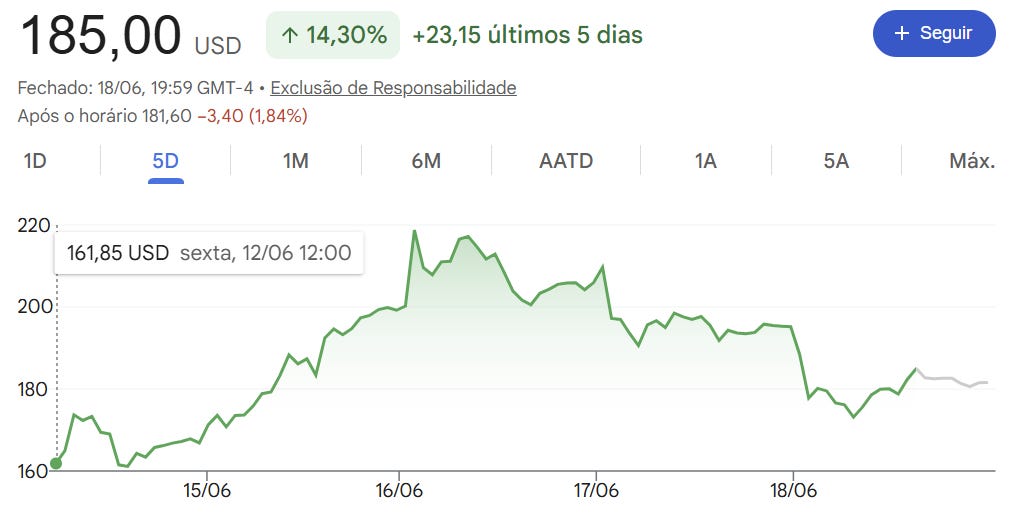
That first-week gain beat the average of the 30 biggest US tech IPOs of the last 15 years — but the average maximum drawdown for megacap debuts is 55% within the first year. Should we wait and see ?
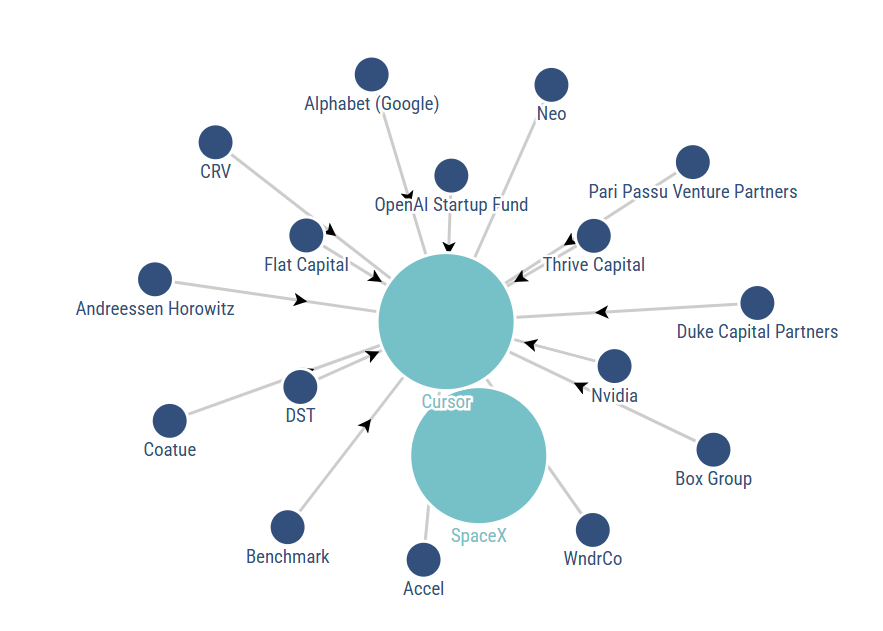
What turned the tape on Thursday wasn’t fundamentals — it was Elon being Elon. Days after raising $75 billion, SpaceX announced a $60 billion all-stock acquisition of the AI coding startup Cursor (immediate dilution for anyone who bought on the open market), and Bloomberg reported a $20 billion bond offering on top. Raise seventy-five, spend sixty, borrow twenty — the market did the obvious math and asked the obvious question…But people were more focused on his personal story.
He made more in a week than Warren Buffett made in a lifetime
Here’s the part that breaks your brain. The IPO crowned Elon Musk the first trillionaire in history — net worth somewhere around $1.1–1.2 trillion depending on whose index you read. The listing alone added more than $180 billion to his fortune.
Warren Buffett — the greatest capital allocator of the last century, eleven decades into compounding — is worth roughly $145 billion and sits 11th on the Bloomberg index. Musk added *more than Buffett’s entire life’s work* to his pile in a single market event. As a trillionaire, he’s worth about seven Buffetts stacked on top of each other. Larry Page, the world’s second-richest person, is a distant ~$295 billion behind.
And yet — this is the part nobody dwells on — Musk is not liquid (to some extent, at least). By his own post on X, less than 0.1% of his net worth is in cash. The trillion is paper: ~41% of SpaceX and 82–85% of the voting power, plus Tesla. A fortune that exists at the mercy of a stock price, controlled by a man who can’t actually touch most of it.
The lock-up nobody’s pricing in
Which brings us to the thing the first-week euphoria is papering over: the float. A lock-up is the post-IPO period when insiders and early investors are legally barred from selling — it stops a wall of supply from hitting the market on day one. Right now only about 4–5% of SpaceX is actually tradable. That scarcity is the rally. Thin float plus forced passive buying — SpaceX qualifies for fast-track Nasdaq-100 inclusion just 15 days after listing, which mechanically forces index funds to buy. That’s not price discovery. That’s a supply squeeze wearing a valuation costume.
Musk himself committed to a full 366-day lock-up — a genuinely positive signal given his control. But everyone else is on a staggered schedule that starts unlocking far sooner: ~20% of insider holdings two days after the first earnings report (Q2, expected August), another 10% if the stock holds 30% above its IPO price, then 7% tranches through day 135, a big ~28% slug after Q3 earnings (late October), and the balance at the standard 180-day mark in December. The drip starts in weeks, not months.
The street’s quiet base case: when that supply arrives, the thin-float magic runs in reverse. The comps aren’t comforting: Rivian dropped ~20% around its unlock, Uber hit an all-time low on its expiration, even Snowflake — which also used a staggered schedule — still fell ~11% on its final unlock week. The higher the speculative premium at IPO, the uglier the expiry…
The Amazon question — and why it doesn’t hold
You’ll hear the bull case everywhere this month: Amazon lost money for years too, and look how that turned out. It’s seductive, because the cap comparison is real — SpaceX is already brushing up against Amazon’s ~$2.6 trillion. At roughly $203 a share it passes Amazon; around $230 it passes Microsoft. On paper, a rocket-and-satellite company that lost $4.9 billion last year is worth about what the everything-store is worth.
But that’s exactly where the analogy collapses. Amazon does ~$747 billion in revenue and tens of billions in profit. SpaceX did $18.7 billion in revenue in 2025 (up a strong 33%) and lost $4.9 billion — Starlink is genuinely profitable, ~$4.4 billion in operating profit, but xAI, merged in this February, is torching it. Same market cap, opposite fundamentals.
Amazon IPO’d in 1997 at a $450 million valuation — about 3x revenue. Google went out at 7x, Meta at 20x. SpaceX is trading north of 100x sales — roughly 142x by some counts. There is no version of the early-Amazon story that starts at 142x revenue.
My read — will it last?
No, not at these levels, and the catalyst is already on the calendar. The first-week pop is float mechanics, not a referendum on SpaceX. The real test is the August earnings print landing on top of the first lock-up tranche. I’d expect the scarcity premium to compress hard the moment supply unlocks, with the stock drifting back toward — possibly through — its IPO price into the back half of the year. This isn’t a SpaceX-is-a-bad-company call. Starlink is a real, profitable, structurally advantaged business, and the launch lead over everyone else is a decade deep. It’s a “you’re paying 142x sales for a business losing $5 billion while xAI eats Starlink’s profits, and the only thing holding the price up is that almost nobody is allowed to sell yet” call. When they can sell, they will. The date is printed in the prospectus. It always is… let’s see if I am right!
The Anthropic “Novela”
The Anthropic story did not end with the government-ordered shutdown of Fable 5 and Mythos 5 mentioned last week in this newsletter. Throughout the week, the company has been actively lobbying Washington to reverse the decision, arguing that the alleged "jailbreak" identified by regulators was narrow, non-universal, and no more powerful than capabilities already available in competing models.
Anthropic's position is that applying this standard across the industry would effectively freeze frontier model launches altogether. Meanwhile, the debate has expanded far beyond one company. AI governance became a prominent topic at G7 discussions, where policymakers increasingly framed frontier models as strategic infrastructure rather than simply software products. The broader concern is no longer whether advanced AI should be regulated, but who gets access to it, under what conditions, and how national security considerations should be balanced against innovation. The next few weeks will likely determine whether the Anthropic episode remains an isolated event or becomes the first major precedent for controlling access to frontier AI models through export regulations. If it is the latter, the implications extend far beyond Anthropic: every leading AI lab would need to incorporate geopolitical risk, nationality-based access controls, and regulatory approval into future product launches.

General news:
• Natura launched the Natura Innovation Challenge 2026, an equity-free acceleration program connecting beauty and wellness startups to its distribution, product development and innovation ecosystem. The initiative follows R$1.4B invested in innovation by the company in 2025. 🇧🇷
• Bradesco partnered with USP researchers to strengthen AI agent security as the bank expands the use of agentic AI across more than 700 production use cases. The initiative focuses on adversarial AI testing, governance and resilience for enterprise deployments. 🇧🇷
• The Latin American SaaS market is projected to reach $46B by 2027, according to Acorn. Brazil accounts for nearly half of the market and almost two-thirds of regional SaaS M&A activity, while AI-native companies continue to command valuation premiums. 🌎
• Pier was ranked Brazil’s top auto insurer in Forbes’ 2026 global ranking, outperforming traditional insurers in customer satisfaction, claims experience and transparency. The recognition reinforces the growing relevance of digital-first insurance models in Latin America. 🇧🇷
Deals:
• Datamint raised $5M in a seed round led by Headline to expand its AI-powered industrial asset management platform. The company helps critical industries predict failures, optimize maintenance and improve operational reliability through real-time decision support. 🇧🇷
• Inspira raised R$15M from Cloud9 Capital and Vivo Ventures to accelerate growth of its AI-powered legal platform. The company serves more than 14,000 users and manages a database of 83 million legal decisions across Brazil’s court system. 🇧🇷
• Cobre and Toku partnered to process more than $200M annually through Mexico’s SPEI network, combining real-time payments infrastructure with recurring payment automation. The alliance targets sectors such as telecom, insurance and subscription services as instant payments continue to scale. 🇲🇽
• Braven raised a $4.6M seed round led by Collide Capital to expand its AI-powered insurance infrastructure platform into London and strengthen operations across Latin America and the U.S. The company has already supported more than $800M in written premiums through its platform. 🇨🇴
• Dosimagem secured a R$100K grant from FAPERJ to advance its precision dosimetry technology for therapeutic nuclear medicine. The funding will support development of solutions aimed at improving treatment planning and outcome evaluation. 🇧🇷
• GoDeep received investment from Tecnosinos to accelerate development of web-based enterprise applications and digital integration solutions focused on business productivity. 🇧🇷
• Diavicon received backing from Fundep and Koinz Capital to expand its infrastructure diagnostics platform. The company uses technology to monitor structural conditions, estimate asset lifespan and support maintenance decisions. 🇧🇷

General news:
• NG.CASH is entering a new growth phase through credit expansion, leveraging a base of more than 8 million Gen Z users and recently acquired regulatory licenses. The fintech expects credit products to become its largest revenue driver as it evolves into a broader financial platform offering insurance, lending and investment products. 🇧🇷
• Blockradar officially entered Colombia, offering infrastructure that allows fintechs and payment providers to integrate stablecoins without building blockchain systems internally. The company has already processed more than $600M in transaction volume globally. 🇨🇴
Deals:
• Hexagon raised a R$10M seed round led by Pear VC to expand its Generative Engine Optimization (GEO) platform. The company helps brands improve visibility inside AI platforms such as ChatGPT and is positioning itself for the rise of agentic commerce. 🇧🇷
• SpaceX acquired AI coding startup Cursor in a $60B all-stock transaction, one of the largest venture-backed technology acquisitions ever. The deal strengthens SpaceX’s AI ambitions and expands its presence in enterprise software through Cursor’s rapidly growing coding platform. 🇺🇸
• Loopia raised a R$6.5M seed round led by Parceiro Ventures to accelerate development of autonomous AI agents for e-commerce and marketplaces. The company focuses on automating customer service, sales and marketplace operations for online retailers. 🇧🇷
• Antler launched its first Brazil-focused venture fund, a vehicle that could reach R$250M with support from BNDES, Finep and other development institutions. The fund will invest in up to 100 pre-seed and early-stage startups across Brazil. 🇧🇷
• ABSeed Ventures raised R$200M across two new funds to back AI-driven software startups. Alongside a new seed fund, the firm launched an evergreen vehicle focused on follow-on investments and growth-stage opportunities. 🇧🇷
• ProtectU raised a $100K angel investment to expand its AI-powered insurance management platform. The company helps users understand insurance policies through its AI assistant, Amparo. 🇺🇾

General news:
• NeoSpace became a global NVIDIA case study after deploying foundation models for financial institutions using NVIDIA’s GB200 infrastructure. Its platform processes trillions of records and is already operating at one of Latin America’s largest private banks. 🇧🇷
• Qualcomm is betting on more than 40 AI-powered wearable devices, including smart glasses, earbuds and AI-enabled accessories powered by its new Snapdragon Wear Elite platform. The company is positioning itself at the center of the emerging AI wearables market as the next major computing category beyond smartphones. 🇺🇸
• The Central Bank removed the R$500 limit for Pix by proximity, allowing users to define their own transaction limits directly with financial institutions. The change could accelerate adoption of NFC-based Pix payments and support broader availability on Apple devices. 🇧🇷
• UniCredit is nearing control of Commerzbank after increasing its stake to approximately 42%. If completed, the roughly $50B transaction would become Europe’s largest banking deal since the 2008 financial crisis. 🇪🇺
• Clara launched Clara Global, its first product built entirely with AI-generated code. The platform enables companies to manage global expenses and reflects the growing shift toward AI-native software development across Latin America. 🇲🇽
• Banco de Bogotá launched an Integrated Treasury Suite with Payana and Buk, centralizing treasury, payroll, accounts payable and receivable into a single platform. The solution uses AI to automate financial operations and reduce manual processes. 🇨🇴
Deals:
• Trace Finance raised a $32M Series A led by CoinFund with participation from Coinbase Ventures, Haun Ventures, Valor Capital, Jump Capital and Paxos. The company provides cross-border banking and payments infrastructure connecting the U.S., Latin America and other regulated markets. 🇺🇸🇧🇷
• PlurieBR acquired Portuguese ESG software company EXO, expanding from diversity analytics into a full ESG management platform. The company plans to launch a R$6.5M seed round following the transaction. 🇧🇷🇵🇹
• Telepatia raised a $33M round led by Andreessen Horowitz (a16z) to expand its AI copilot platform for physicians. The company automates clinical documentation, supports diagnostics and is accelerating growth across Latin America. 🌎
• Vixtra raised R$50M in a Series A led by Valor Capital to expand its trade finance, FX and banking platform for importers. The company grew 2.5x over the past year and surpassed $12M in ARR. 🇧🇷

General news:
• QuintoAndar announced a R$2B investment in AI over the next two years to redesign the entire real estate journey around artificial intelligence. The company plans to deploy AI assistants, pricing optimization tools and automated customer interactions across its platform. 🇧🇷
• EXA launched EXA Labs, a new AI and cybersecurity research center in Piauí, with plans to invest R$25M over the next four years in technologies focused on fraud detection, deepfakes and financial crime prevention. The initiative strengthens Brazil’s growing AI security ecosystem while positioning Piauí as an emerging technology hub. 🇧🇷
• Meta’s acquisition of Manus is being unwound after intervention from Chinese authorities, prompting existing investors to explore buying the company back at the original $2B valuation. The case highlights growing geopolitical tensions around ownership of strategic AI assets. 🇨🇳
• Noam Shazeer is leaving Google to join OpenAI, marking one of the most significant talent moves in the AI industry this year. The creator of key Transformer architecture innovations becomes the latest example of intensifying competition for elite AI researchers. 🇺🇸
Deals:
• Broker IA received investment from Koinz Capital to expand its AI-powered lead qualification and CRM platform for real estate professionals. The company helps automate customer acquisition and sales workflows through artificial intelligence. 🇧🇷
• Alfa received funding from Tecnosinos to expand its ERP software platform focused on business process automation and operational management. 🇧🇷

General news:
• iFood Benefícios surpassed R$1B in monthly payment volume after growing 82% year-over-year. Around 40% of sales are now supported by AI, helping the company reach breakeven while serving 65,000 businesses and 1.5 million active users. 🇧🇷
• AI House Brasil launched a residency program designed to bring together founders, developers, researchers and AI builders to create and scale AI-native startups. The initiative will provide mentorship, technical support and investor access, reinforcing Brazil’s ambition to become a leading AI hub in Latin America. 🇧🇷
• Daki is revisiting national expansion plans after receiving strategic backing from iFood. The online grocery platform is approaching R$1B in annualized revenue, growing more than 50% per year and preparing to scale operations through AI-driven logistics, loyalty initiatives and geographic expansion. 🇧🇷
• Zoox entered the risk, compliance and credit analytics market after investing approximately R$50M in a new AI and big-data platform. The business already serves more than 170 clients, including Santander, Bradesco, Mapfre and Rede D’Or, and is expected to become a major growth driver for the company. 🇧🇷
• Nvidia and Dell argued that the next phase of AI adoption depends on data and infrastructure readiness rather than access to models alone. Executives highlighted growing demand for AI factories, enterprise data platforms and modern computing infrastructure capable of supporting large-scale AI workloads. 🌎
• Zulu launched a new treasury and collections platform for Colombian importers, enabling businesses to centralize collections, FX management and international payments in a single workflow. The launch strengthens Zulu’s position in Latin America’s cross-border payments infrastructure market. 🇨🇴
Deals:
• Agibank raised R$500M through its seventh public issuance of Letras Financeiras to support credit growth and refinance liabilities. The issuance follows more than R$1.5B raised through debt markets since 2023. 🇧🇷
• Unpack Design secured backing from Genesis Institute to expand its brand experience and immersive environment design services, helping companies strengthen customer engagement and brand positioning. 🇧🇷

See above the ANTHROPIC NOVELA!

Febraban Tech 2026
Date: August 24–26, 2026
Location: São Paulo, Brazil
Description: One of the main financial technology and innovation events for the banking and financial services sector in Latin America.
More infoMinas Summit 2026
Date: June 17–18, 2026
Location: Belo Horizonte, Brazil
Description: The largest innovation event in Minas Gerais, bringing together startups, investors, executives, and ecosystem leaders to discuss technology, entrepreneurship, and business opportunities.
More infoConta Azul Con 2026
Date: August 1, 2026
Location: São Paulo, Brazil
Description: A conference connecting accounting, entrepreneurship, and technology through keynotes, workshops, networking sessions, and discussions on business innovation.
More infoRio Innovation Week 2026
Date: August 4–7, 2026
Location: Rio de Janeiro, Brazil
Description: One of Brazil’s largest innovation festivals, bringing together entrepreneurs, startups, corporations, investors, and policymakers to discuss technology, business, and social transformation.
More infoSP2B (São Paulo Beyond Business) 2026
Date: August 9–16, 2026
Location: São Paulo, Brazil
Description: A new business and innovation event designed to connect entrepreneurs, executives, investors, and corporations through discussions on growth, creativity, and the future of business.
More infoDeep Tech Summit 2026
Date: August 11–12, 2026
Location: São Paulo, Brazil
Description: A conference focused on science-based innovation, bringing together deep tech startups, investors, corporations, and researchers to explore frontier technologies and emerging opportunities.
More infoStartup Summit 2026
Date: August 26–28, 2026
Location: Florianópolis, Brazil
Description: One of Latin America’s leading startup events, connecting founders, investors, and ecosystem leaders through content, networking, and business opportunities.
More infoHackTown 2026
Date: September 3–7, 2026
Location: Santa Rita do Sapucaí, Brazil
Description: A unique innovation, technology, and culture festival that transforms an entire city into a hub for networking, learning, entrepreneurship, and creative collaboration.
More infoHotmart Fire 2026
Date: September 10–12, 2026
Location: Belo Horizonte, Brazil
Description: One of the leading events for the digital business and creator economy ecosystem, covering marketing, sales, online education, innovation, and business growth.
More infoDreamforce 2026
Date: September 15–17, 2026
Location: San Francisco, United States
Description: Salesforce’s flagship conference focused on CRM, AI, digital transformation, customer experience, and enterprise innovation.
More infoTechCrunch Disrupt 2026
Date: October 13–15, 2026
Location: San Francisco, United States
Description: A leading global startup conference where founders, investors, and technology leaders discuss entrepreneurship, fundraising, and innovation.
More infoWeb Summit Lisbon 2026
Date: November 9–12, 2026
Location: Lisbon, Portugal
Description: One of the world’s largest technology conferences, bringing together entrepreneurs, investors, executives, and policymakers to discuss global innovation trends.
More infoSlush 2026
Date: November 18–19, 2026
Location: Helsinki, Finland
Description: A globally recognized startup and venture capital conference focused on connecting founders and investors while fostering innovation and growth.
More infoAWS re:Invent 2026
Date: November 30 – December 4, 2026
Location: Las Vegas, United States
Description: AWS’s flagship cloud computing conference, featuring product launches, technical sessions, training, and discussions on cloud infrastructure, AI, and data.
More info

nothing much this week, apart from general news…

The AI Daily Brief Podcast - as always!

“Quanto tempo, o tempo tem?” - “How Much Time Does Time Have?”
Bogotá will pick Huawei if Washington keeps treating spectrum policy like a favor. The 2022 Brazilian circus proved bans just push money to the same firms under new names.