
LatAm Tech Weekly
#196: Secondaries, AI updates, deals of the week... and much more!

Weekly writing about what is happening in LatAm tech. By day, I lead the business development team at Itau Unibanco. By night, I am reading and learning about technology in general (now, with a focus on AI). During the weekends, I’m writing the LatAm Tech Weekly.
If you have not subscribed yet, join the 12,900+ weekly readers by subscribing here!
Happy Sunday!
I have to tell you something—so many people think I have this big team behind me, cranking out the newsletter during my work week… but honestly, that couldn’t be further from the truth.
Just yesterday, I was at a friend’s party, and one of her friends (someone I’d never met before) came up to me and said, “I really love the content you put out. Your newsletter is a must-read for me every Monday—I’m a lawyer focusing on tech deals, and it’s always spot on.”
I was flattered, thanked him, and told him how much that means to me. I love when readers come up to me and say they’re enjoying the content. But, of course, the next thing he asked was: “So, how big is your team?” 😂 I get that question all the time. People assume there’s an army of writers behind this thing. The truth? It’s just me. Every single Sunday. For the past four years.
Some Sundays are easier than others—I chose to do this, and I genuinely love writing—but, man, some days are hard. Like today. The sun’s out, I’d rather be at the pool… but here I am, sitting down to write.
If there’s one thing I pride myself on, it’s consistency. It shows up in everything I do. Yesterday, for example, I had a long training run (yes, the marathon’s coming up!), but I was completely exhausted. I dragged myself out of bed, had an espresso, took three deep breaths, and just went. The feeling when I finished? Second to none.
Writing this newsletter feels the same way—sometimes I catch myself thinking, “Why did I decide to do this every week?” But I know that when I hit send, I’ll feel that same rush of satisfaction. And, hopefully, you’ll feel it too when you read it.
So, without further ado—let’s do this.

Follow me on LinkedIn , Instagram or X for daily updates!
Opinions expressed here are solely my own and does not represent those of people, institutions, organizations that I may or may not be associated with in any capacity, unless explicitly stated.
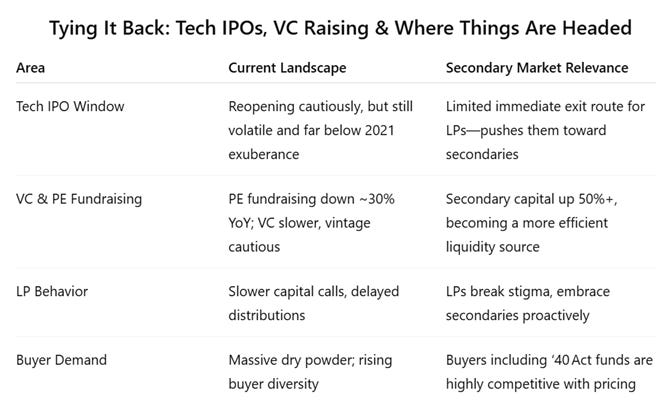
Last week, I talked about how tech markets have been oddly resilient despite choppy macro signals—IPO windows are cautiously reopening for tech in the U.S. (Reddit and Astera have been good test cases), but we’re far from 2021 levels. VC fundraising, on the other hand, is still tight: global PE fundraising dropped nearly 30% YoY in Q1, and VCs are taking longer to close new funds. That scarcity of fresh capital is pushing investors to get creative—and right now, the secondary market is stealing the spotlight.
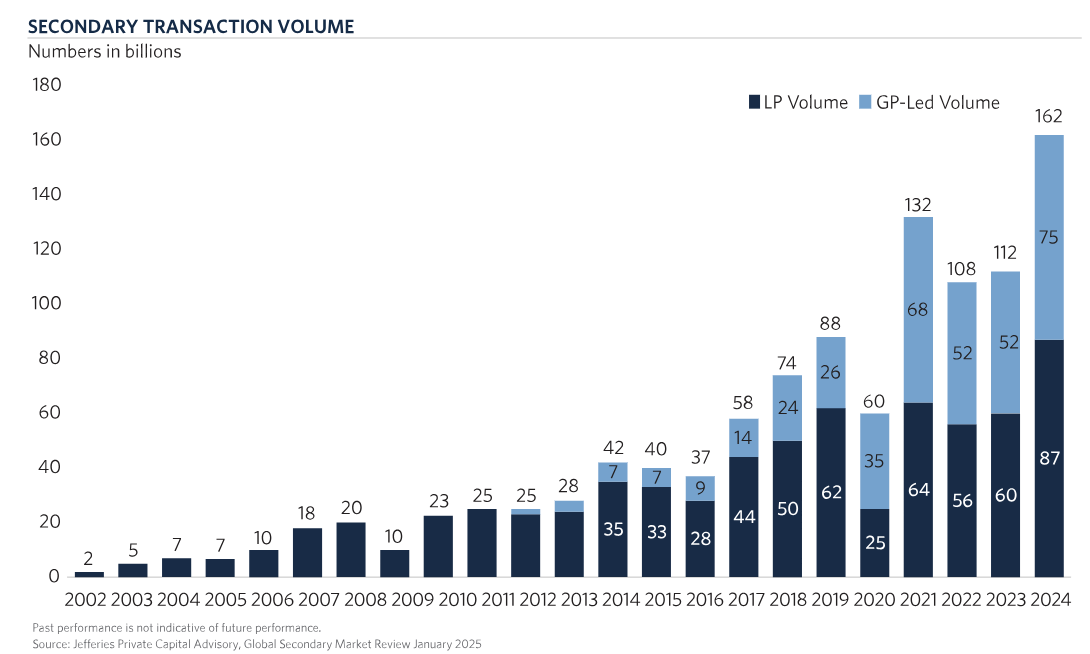
After four consecutive years of declining private market exits and slow distributions to LPs, liquidity-starved allocators are rushing to sell. The stigma around secondaries as “distressed sales” is gone—today, it’s just smart portfolio management. There is now a general sentiment that If LPs wait for the market to give them liquidity, they’re going to miss out on vintages. While the figures below are for the U.S., the same can be said for Latin America. Earlier stage funds are exiting for later stage investors to come in before a outright IPO or sale.
And the numbers? Huge. Global secondary transaction volume hit a record $162B in 2024, blowing past the $132B high of 2021. LP-led deals made up $87B, with roughly 40% coming from first-time sellers—the same proportion expected this year. Two headline-grabbing transactions set the tone early:
Yale University sold $2.5B of PE and VC assets—its first major secondary sale ever.
NYC’s pension system unloaded $5B in PE holdings to Blackstone Strategic Partners—also a first.
What’s fueling the frenzy? For one, buyers are flush with cash: while traditional PE fundraising slumped, capital raised for secondary vehicles jumped 51.6% YoY, per PitchBook. Add some peer pressure - and you’ve got a perfect storm.
The question now is whether this supply surge will weigh on pricing. So far, big players don’t think so—demand is high, quality assets are coming to market, and first-time sellers are just adding to the mix.
If tech IPOs continue to thaw and VC fundraising slowly picks up, we might see some pressure ease later this year. But for now, the secondary market is where the action—and liquidity—is.
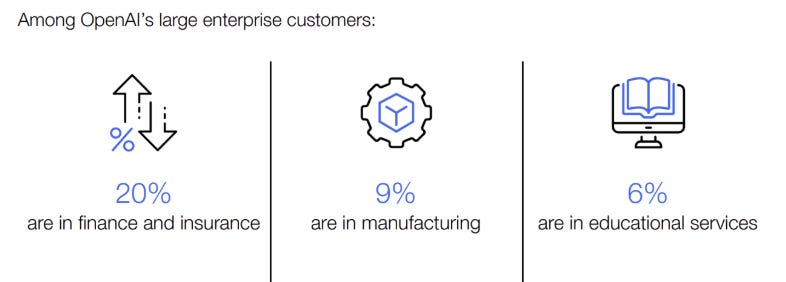
Moving on to my usual AI update, OpenAI’s recent internal graphs show just how explosive its growth has been: by July 2025, ChatGPT now handles over 2.5 billion prompts per day—a ~150% jump since late 2024. Weekly active users surged from ~300 million in December to an estimated 500 million by March, with some analysts putting global MAUs near 800 million. In the U.S. alone, ChatGPT now processes around 330 million daily prompts. Finance and insurance remain strong enterprise verticals, making up roughly 20% of OpenAI’s largest customers.
Speaking of momentum, OpenAI is reopening its massive $40 billion funding round on Monday, July 28. First announced in March, the round valued OpenAI at $300 billion and was originally led by SoftBank, which committed ~75% of the capital (about $30 billion). However, if OpenAI fails to restructure into a public benefit corporation by year-end 2025, SoftBank’s commitment could be slashed to $10–20 billion. There had been reported tensions between the two companies over the Stargate AI data center project, but a recent joint statement confirmed it is officially moving forward.
The reopened round is also attracting new heavyweight backers. Founders Fund and Dragoneer are each reportedly committing $1 billion+, while SV Angel is said to have pledged $200 million+. The first $10 billion tranche had already been closed earlier this year, with $7.5 billion from SoftBank and the remainder from co-investors such as a16z and GIC.

On the product side, the focus has shifted to GPT‑5. According to multiple reports, it will integrate the o-series’ reasoning capabilities directly into the GPT framework, simplifying user choice and moving a step closer to OpenAI’s long-term AGI vision—though Sam Altman has made it clear that GPT‑5 still won’t cross the AGI threshold. The model will come in three versions: a standard, a mini, and a nano (the latter API-only). An open-weight variant similar to o3-mini will be released via Azure, Hugging Face, and other cloud providers.

General news:
Itaú launched Emps, a fully digital banking app for small businesses earning R$200K–R$3M/year. Powered by GenAI, it replaces human managers with real-time insights and automation, offering fee-free banking, instant onboarding, and cash flow tools for solo founders. Itaú Unibanco PN rose 1.17% on the news—a bold bet to scale without scaling costs. 🇧🇷 Congrats Pedro Prates & team!!!!!
OLX lost a lawsuit against QuintoAndar over alleged unfair competition. Judges ruled unanimously that messages inviting users to join QuintoAndar’s referral program came from independent users, not employees. OLX was ordered to pay ~R$14K in legal fees. 🇧🇷
Trela filed an antitrust complaint against Shopper, alleging it locked suppliers into exclusive deals with million-real incentives, cutting off rivals like Trela, Daki, and Amazon. At least 10 key partners were reportedly targeted. Brazil’s Public Prosecutor will decide whether to proceed. 🇧🇷
BlueShift Brasil and Intelligent-IA launched BlueShift Agro, a joint venture developing AI, IoT, and automation solutions for agriculture. Targeting R$30M in annual revenue within 3–4 years, it aims to create 120 jobs and boost efficiency and sustainability in farming. 🇧🇷
Paytime reported a 55% revenue increase and 20% growth in active clients in H1 2025, with online transaction volume up 800% YoY. Now focusing on established companies, it added split payments, secure payment links, and a gateway API, with Tap on Phone and a proprietary terminal coming soon. 🇧🇷
OpenAI announced a $50M fund to support nonprofits and community organizations using AI for education, health, economic opportunity, and community research. The initiative focuses on community-driven solutions to ensure AI benefits reach everyone. 🇺🇸
Play9 restructured into Play9 Content Group, bringing its content, talent, and brand solution units under one umbrella. The move aims to position Play9 as a creative digital ecosystem, with CEO João Pedro Paes Leme becoming Group President. 🇧🇷
Clip integrated Belvo’s Open Finance tech to power PrestaClip, enabling loans with employment data, automated risk updates, and frictionless payments. The move targets financial inclusion in a market where 30% of credit requests are denied due to thin credit history. 🇲🇽
Grupo Aval won regulatory approval to launch GOU Payments, a low-value payment system inspired by Brazil’s PIX. Backed by Pronus and CMSW, it will provide secure, real-time transactions, with expansion to other LatAm markets planned. 🇨🇴
VU Security is expanding in Brazil, pushing its Online Persona authentication model, which uses behavior-based verification instead of passwords. Already protecting 350M+ digital identities, it targets finance, healthcare, and government, aiming for 30% growth in 2025. 🇧🇷
Ripio partnered with Tapi to let users in Argentina pay 5,000+ bills (utilities, internet, school fees) directly with crypto, boosting real-world crypto utility for 20M+ users. 🇦🇷
Puntored and Metlife Colombia launched an insurance program for small merchants, offering free pilot coverage to 7,000 businesses for accidents, cyberattacks, and equipment damage. The initiative aims to deepen financial inclusion. 🇨🇴
Deals:
Figma filed for a $979M IPO after its $20B merger with Adobe was blocked. The move bets on independent growth amid renewed investor appetite for creative software. 🇺🇸
BitGo and Bullish filed for IPOs, joining a wave of crypto companies going public. BitGo, a leading custodian with $64B in assets, filed confidentially amid improved market optimism and regulatory clarity. 🇺🇸
Dynamix and The Ether Reserve are merging to form Ether Machine, managing $1.5B+ in ether. Backed by Kraken and Blockchain.com, the deal includes an $800M investment. Ether Machine will list on Nasdaq under ETHM later this year. 🇺🇸
Smartbrain founders bought back control from Bradesco’s Inovabra fund after three years. Managing 350K portfolios worth R$310B, the wealthtech now targets predictive intelligence and scaling in Brazil’s growing advisory market. 🇧🇷

General news:
Stone plans to exit Reclame Aqui, Latin America’s largest consumer complaint platform, after acquiring 50% in 2022. The move is part of a strategy to refocus on core payments. Reclame Aqui has 30M users and 360K companies. 🇧🇷
UnionPay will enter Brazil in 2025, challenging Visa and Mastercard with Pix integration and a social impact model. Backed by fintech Left, it aims to adapt 1,500+ ATMs and reach 70% of retail. Unlike U.S. rivals, it operates via China’s CIPS, not SWIFT. 🇧🇷🇨🇳
Noh teamed up with Nomad to help traveling couples manage finances through shared “Caixinhas”—smart subaccounts with pre-set budgets for flights, stays, and activities. Perks include cashback, lounge access, and free international eSIMs, bridging saving (Noh) and spending abroad (Nomad). 🇧🇷
Vudy is redefining cross-border finance with a blockchain infrastructure for freelancers and global orgs. Offering smart payments, real-time settlement, and low-cost transfers, it has already processed ~$1M in pilots and integrates with 9+ blockchains. 🇬🇹
Brazilian retailtechs raised R$1.5B in 25 rounds in H1 2024, mapping 507 startups. São Paulo leads with 48% of companies, and AI powers 138 of them, focusing on predictive analytics, dynamic pricing, and hyper-personalization. 🇧🇷
Ecx Pay is scaling fast with flexible benefits, adding salary advances and a Pix-powered transit solution integrated with Mastercard. Serving 1.2K+ clients, it targets R$400M TPV in 2025 and plans fleet cards and expense tools. 🇧🇷
Deals:
TOTVS is acquiring Linx for R$3.05B (potentially R$3.42B for Stone) to strengthen its retail tech portfolio. Funded by cash and debt, the deal awaits CADE approval and includes plans for AI-driven innovation. 🇧🇷

General News:
Meituan will launch in Brazil this November under Keeta, investing $1B to compete with iFood and Rappi. It aims to reach 15 metro areas by mid-2026 and 1,000 cities by 2030. 🇨🇳🇧🇷
Nuvemshop will offer R$100M in credit via Nuvem Pago by 2025, with loans from R$500 to R$150K. One-third of borrowers already report revenue boosts, and 25% grew sales 17%+. 🇧🇷
Tropical.ia launched a platform for companies to build internal AIs using private data. Targeting Brazil’s low GenAI adoption (13%), it offers custom copilots for HR, sales, and healthcare, built on RAG and private infrastructure. LatAm expansion is planned. 🇧🇷
LG lugar de gente is scaling its HR tech business, targeting R$400M revenue in 2025 with 20%+ annual growth. Backed by H.I.G. and HIX Capital, it processes R$8B monthly for 2,200 clients and is eyeing acquisitions. IPO plans are postponed to after 2027. 🇧🇷
PayPal unveiled PayPal World, a global platform connecting digital wallets like Venmo, UPI, Mercado Pago, and Weixin Pay. Launching later this year, it will support international shopping and remittances, with future plans for stablecoins and AI payments. 🇺🇸
JP Morgan is exploring crypto-backed loans, allowing Bitcoin, Ether, or ETFs as collateral. Once a Bitcoin critic, CEO Jamie Dimon is shifting under regulatory clarity and client demand. The bank is also developing a USD stablecoin. 🇺🇸
Deals:
Substack raised $100M in Series C led by BOND and The Chernin Group, hitting a $1.1B valuation. Now evolving into a creator-focused social network, it supports video, podcasts, and real-time interactions, with 5M+ paid subs. 🇺🇸
Gupshup secured $60M+ in equity and debt to expand across India, MENA, LatAm, and Africa. Powering 120B+ messages annually for 50K+ businesses, it aims to become core infrastructure for enterprise-customer communication. 🇮🇳
iFood is in advanced talks to acquire Alelo for R$5B, aiming to lead Brazil’s meal benefits market (~30% share). The move aligns with Prosus’ goal to double revenue by 2028. 🇧🇷
Amazon is finalizing the acquisition of Bee, an AI wearable startup offering transcription and personal assistant features for $50. OpenAI is also reportedly developing an AI wearable for 2026. 🇺🇸
Fu2re raised R$12.5M from Copel Ventures and Indicator Capital. Founded in 2017, the AI startup uses regulated R&D funding to build solutions for utilities, with clients like Light, Enel, and Petrobras. It now eyes Silicon Valley and Europe. 🇧🇷

General news:
CMN—Brazil’s National Monetary Council, the country’s top financial regulatory body—approved Resolution 5.237, a major update to rules for credit, finance, and investment companies. Effective Sept 1, it consolidates decades-old regulations, explicitly covers fintechs and payment institutions, and allows foreign fundraising and new instruments like LCIs (real estate credit notes) and COEs (structured operations certificates). The move aims to boost competition and expand credit access for consumers and small businesses. 🇧🇷
Lulo Bank will publicly launch its credit card in Sept 2025 after issuing 10K+ cards in pilot. The Colombian neobank has 650K users and plans expansion into insurance and corporate banking. An IPO is under consideration for late 2025. 🇨🇴
S&P 500 and Nasdaq hit record highs, driven by Alphabet’s strong earnings and AI optimism. Microsoft, Nvidia, and Amazon gained 1%+, while Tesla fell 8.2%. U.S.-Japan trade deals and EU talks further boosted investor sentiment. 🇺🇸
IARA, an AI tool developed by Paipe, is automating public health system reimbursements in Brazil, cutting costs and delays by reviewing claims once handled manually by ANS. Built with NLP and computer vision, it goes live in September. 🇧🇷
VERT launched a blockchain platform on the XRP Ledger to tokenize real-world assets, starting with a $130M agribusiness receivables issuance. Targeting over $500M in future deals, it aims to bring faster settlements and transparency to Brazil’s 20%-of-GDP agribusiness sector. 🇧🇷
Wibond introduced a Fintech-as-a-Service platform that lets businesses launch digital accounts, USD wallets, and other financial products in weeks. It handles tech, operations, and compliance via partners like Mastercard and dLocal. 🇦🇷
Coyote, a new banking trojan, is targeting Brazilian banks through phishing and WhatsApp Web. Built to evade antivirus systems, it steals banking data using encryption and obfuscation. Tempest warns dozens of banks are already compromised. 🇧🇷
Crypto investments reached $60B in 2025, doubling since May and surpassing private equity and credit markets, per JPMorgan. The surge is fueled by favorable U.S. regulations like Trump’s Genius Act for stablecoins. 🇺🇸
Deals:
nstech acquired Gasola, a fuel payment and management startup, marking its first H2 2025 deal. With 200+ clients and 6% monthly growth, Gasola strengthens nstech’s logistics ecosystem. The $1B+ ARR company targets 3–5 M&As annually. 🇧🇷
PagBank raised R$920.3M in its second public offering of financial notes, 30% above its R$700M target due to strong demand. Funds will expand acquiring and credit services. 🇧🇷
RapiCredit secured $5M from Alma Sustainable Finance, Almavest, and the U.S. DFC to expand inclusive credit in Colombia, targeting unbanked and informal workers. New products will support gender equity and ESG goals. 🇨🇴

General news:
B3 is doubling down on Brazil’s R$10T receivables market with the launch of its Receivables Monitor platform. The AI-powered tool (via Neurotech) will digitize and centralize trade invoices, reducing fraud and unlocking SME credit potential. Pending Central Bank approval, it’s a major step in B3’s shift beyond equities into data and infrastructure. 🇧🇷
IMF reached a staff-level agreement with Argentina, unlocking a $2B disbursement from April’s $20B loan. The Fund praised President Milei’s fiscal discipline, disinflation progress, and reserve rebuilding, with final approval expected later this month. 🇦🇷
BIMS Capital and Virgo formed a joint venture to target Brazil’s underserved middle market, aiming for R$500M annual revenue in five years. Focused on asset management and brokerage for companies seeking R$30–70M, it plans to acquire a DTVM to expand institutional reach. 🇧🇷
Brazil’s Central Bank will allow fintechs to operate as full financial institutions starting September. They can now issue real estate credit notes, raise foreign capital, act as acquirers, and invest in other credit firms—leveling the playing field with banks and fueling competition. 🇧🇷
AI-powered scams are surging in Argentina, with fraudsters using deepfakes and fake finance experts to push bogus investment tips via social media and WhatsApp. Economists are responding with legal action and public warnings. 🇦🇷
Deals:
4Equity Media Ventures made its first cash investment, backing Groner, a Brazilian solar CRM startup that has processed R$2B in sales. 4Equity will combine capital, consulting, and marketing to scale the platform, which already has 5K+ users like Fortlev and Weg. 🇧🇷
500 Global will invest $300K in each of 30 AI startups in Latin America—a jump from its prior $80K checks. Founders will get a year of mentorship from 700+ experts plus access to 500’s Silicon Valley Launchpad. Ten startups are already in. 🌎
Natura Ventures invested in Mango Materials, a biotech turning harmful biogas into biodegradable plastic alternatives. The deal supports Natura’s push for circular materials and reduced fossil-based plastic use. 🇺🇸🇧🇷

You will see below an updated list of events, including for the second half of the year. If I forgot your event, and you want to include it - please sure to send those my way asap!
Cubo Conecta 2025
Date: September 2025 (exact dates to be announced)
Location: São Paulo, SP
Description: Celebrating its 10th anniversary, Cubo Conecta is the flagship event of Cubo Itaú, bringing together thousands of entrepreneurs, investors, and innovation leaders from across Latin America. The event offers over 90 hours of content and facilitates more than 5,000 digital connections, highlighting the potential of the technology and innovation ecosystem in the region.
Brazil Climate Summit 2025
Date: September 13–14, 2025
Location: New York, NY, USA
Description: The Brazil Climate Summit focuses on Brazil's role in the global green transition, emphasizing the importance of private sector involvement and international capital to accelerate low-carbon businesses. The event gathers leaders from various sectors to discuss sustainable development strategies.
More infoGartner CIO & IT Executive Conference 2025
Date: September 22–24, 2025
Location: São Paulo, SP
Description: A gathering of CIOs and IT leaders to discuss digital transformation, organizational leadership, and innovation strategies across industries.
More infoMoney 20/20 USA 2025
Date: October 26–29, 2025
Location: Las Vegas, NV
Description: One of the world’s leading fintech and payments conferences, Money 20/20 gathers global leaders across banking, payments, tech, and startups to explore the future of money and financial services.
More infoWeb Summit Lisbon 2025
Date: November 10–13, 2025
Location: Lisbon, Portugal
Description: One of the world’s most influential tech conferences, Web Summit Lisbon connects 70,000+ attendees from startups, enterprises, and media to discuss trends shaping the tech industry.
More infoBrazil Tech Summit 2025
Date: December 9, 2025
Location: São Paulo, SP
Description: Part of the Global Startup Ecosystem Series, Brazil Tech Summit brings together entrepreneurs, government leaders, and investors to foster tech-driven innovation across Latin America.
More info

Stratechery - The AI Unbundling and Content Commoditization
Alex Danco’s Newsletter: A startup is a bundle, and Windsurf broke the bundle

The AI Daily Brief (Formerly The AI Breakdown): Artificial Intelligence News and Analysis
Brazilian Funk from the 90’s during my runs this week :)

“The world wants a gigantic amount more software, 100 times maybe a thousand times more software.” Sam Altman
Speaking at a conference, Altman explained that despite AI dramatically boosting productivity (some say developers are now 10× more productive), demand for software is exploding—creating upward pressure on salaries, not layoffs.