
LatAm Tech Weekly
#213: the most exciting AI week yet, highlights about Slush 2025, deals of the week... and much more!

Weekly writing about what is happening in LatAm tech. By day, I lead the business development team at Itau Unibanco. By night, I am reading and learning about technology in general (now, with a focus on AI). During the weekends, I’m writing the LatAm Tech Weekly.
If you have not subscribed yet, join the 14,200+ weekly readers by subscribing here!
Happy Sunday!
This was one of the most electric weeks in AI so far. Practically every major player dropped a new model or a meaningful update — and, as if that weren’t enough, Big Tech earnings came in blazing, silencing even the most stubborn AI skeptics.
On my side, of course, I test-drove everything I could get my hands on. A lot of you often ask me whether I have a go-to AI course to recommend — and honestly, the most valuable “course” I know is simply using the tools every single day. There’s no substitute for hands-on experimentation.
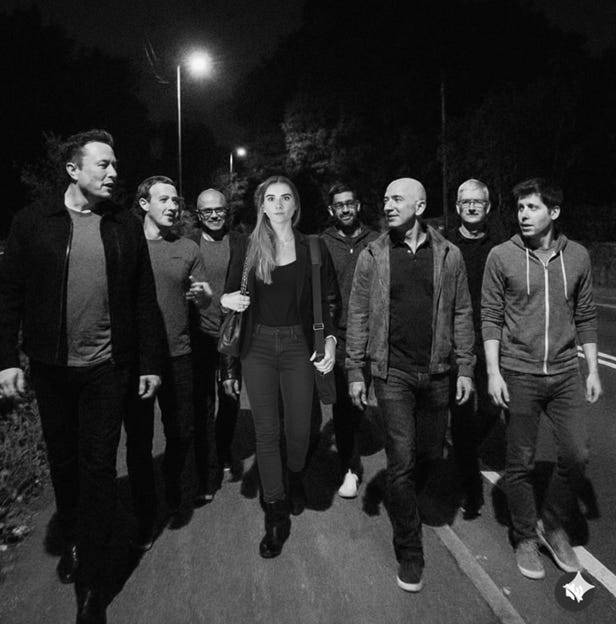
In that spirit, I generated the picture below using Nano Banana 2. Obviously, it’s far from real life. But they say that when you visualize something vividly enough, you increase the odds of making it real… so let’s just say I’m doing my part.
Starting with the biggest theme of the week — AI updates — the volume of news was overwhelming. After last week’s debut of GPT-5.1, this was the moment markets decided whether the “AI trade” is a bubble or a durable new regime. Nvidia answered that question forcefully. The company posted a record Q3 FY26 revenue of US$57B (+62% YoY), including US$51.2B from data centers alone (+66% YoY). Guidance for next quarter came in at a staggering US$65B, with the vast majority tied directly to AI infrastructure. On the earnings call, Jensen Huang pushed back hard on bubble narratives, arguing that AI now touches every phase of computing — training, inference, robotics — and that we’re in the middle of a structural shift rather than a hype spike. All of this landed just days after “Big Short” investor Michael Burry disclosed shorts on Nvidia and other AI names, calling the space frothy. For now, the numbers clearly favor Huang…
On the model side, Google’s launch of Gemini 3 was the other major catalyst. Google positioned it as its most advanced system yet, and early community reaction has been intense. Ethan Mollick described Gemini 3 as a step “from the chatbot era to the digital colleague era,” emphasizing its ability to take action rather than simply answer queries. Social feeds were full of AI builders celebrating its reasoning, speed, and ability to create entire interfaces or workflows from a single prompt. Power users even joked that Gemini 3 is “too good at frontend,” generating production-ready UIs with little guidance.
Its image sibling, Nano Banana 2, arrived in parallel — essentially a creator-focused version of Google’s top image model. It offers higher-resolution output (as you can see from my example above), better text rendering, and more consistent characters, with a stronger understanding of objects, lighting, and composition.
Not to be left out, xAI formalized its rollout of Grok 4.1 in early November and followed up this week with its new Fast and Agent Tools API. Grok 4.1 has been widely praised by early testers for its reasoning and creative output, with several builders calling it the biggest leap the company has made so far — and wondering why it hasn’t gotten more attention.
Meanwhile, OpenAI clearly isn’t letting Google or xAI own the week. It pushed out GPT-5.1 Pro to ChatGPT Pro subscribers, explicitly framing it as a response to the newly released frontier models. The company says the Pro version is stronger on structure, reasoning, professional writing, and data-science workflows. GPT-5 Pro remains available briefly as a legacy option during the transition. On the product side, OpenAI also released group chats (up to 20 people plus the model) across Free, Go, Plus and Pro tiers, turning ChatGPT into more of a shared workspace than a solo tool.
Stepping back from the model-versus-model race, the biggest long-term signal may have come from the Anthropic–Microsoft–Nvidia capital alliance. Anthropic committed US$30B of spend on Azure and up to 1 gigawatt of Nvidia hardware, while Microsoft and Nvidia will invest as much as US$15B in Anthropic. It’s a clear statement that hyperscalers and Nvidia are doubling down on multi-model, multi-cloud AI — even as skeptics keep warning about bubbles.
Put it all together and this single week gave us: Nvidia proving that enterprise AI demand is still accelerating; Google making a serious bid for leadership with Gemini 3; OpenAI answering with GPT-5.1 Pro; and the industry’s biggest players committing more than US$45B to long-term compute. If last week was about the technical debut of GPT-5.1, this week was about something broader: the market waking up to the reality that AI has become a global arms race — and no one wants to be the one who underweights it.
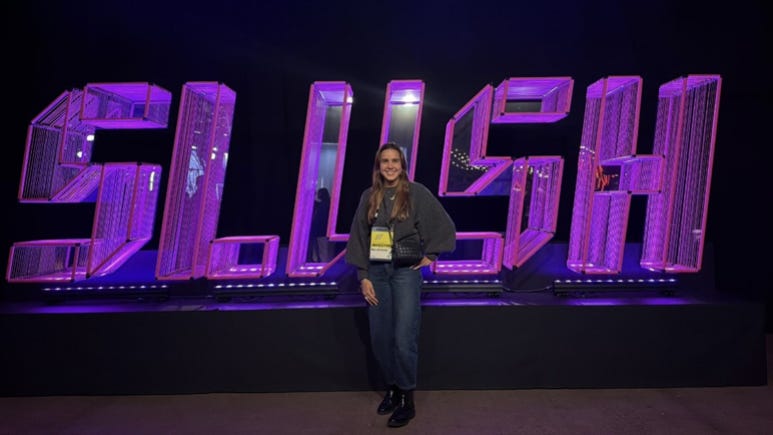
Moving on to Slush 2025 — my dear friend (and fellow tech obsessive) Marcella Falcao was on the ground in Helsinki. I couldn’t make it this year — work has been absolutely relentless — but thankfully I have eyes everywhere. Below is exactly what happened at the most relevant deep-tech event in the world.
SLUSH 2025: Key Takeaways From My Days in Helsinki
Slush took place on November 19–20 and remains the most founder-centric tech gathering out there. This year brought together roughly 17,000 participants, with a concentration of entrepreneurs and investors that’s hard to match. The event is optimized for outcomes: the central arena enables over 1,000 meetings per hour, ultimately driving 25,000 one-on-one sessions powered by one of the best matchmaking platforms I’ve ever used. The investor-to-founder ratio is strong (2 investors for every 3 founders), and 80% of entrepreneurs are early-stage, representing more than 90 countries.
Beyond the scale, Slush stands out for its authenticity. Content is laser-focused on builders — from the founders of Oura, Slack and Adyen to hands-on discussions about brand, culture and company-building. The hottest topics this year were deep tech, frontier AI, cybersecurity, fintech infrastructure and the coming wave of data regulation. Meanwhile, the energy of the event is shaped by more than 100 side activities per day: sunrise runs, late-night happy hours, fundraising dinners, sustainability debates and even sauna sessions. The staging is intentionally dark, sponsors stay in the background, and 1,700+ student volunteers keep the whole thing running.
Below are 10 insights from two standout sessions:
5 Insights from Benedict Evans — “AI Eats the World”
A major platform shift is happening — but the path is still uncertain.
Unlike the mobile or web waves, generative AI doesn’t follow predictable constraints.Big Tech is deploying capital at unprecedented levels.
AI infrastructure is now a hundreds-of-billions-per-year spend, rivaling entire industries.Model performance is converging — shifting value to product and execution.
The real moat now lies in data, UX, GTM and integration.Enterprise adoption is early and mostly experimental.
Most companies expect meaningful deployments only from 2026 onward.AI is dramatically reducing the cost of software creation.
This “infinite interns” effect lets teams ship more with the same resources.
5 Insights from “License to Scale: Competing for Europe’s Future”
Europe is simplifying regulation to support innovation.
A new Commission package aims to harmonize rules for data, cybersecurity and AI.The Data Act begins to unify Europe’s fragmented data environment.
The goal: clearer, more predictable access and sharing across the bloc.Updated GDPR interpretations widen the space for data-driven innovation.
Non-identifiable personal data will no longer be treated as personal data.The EU wants to reduce digital friction — starting with cookie consent.
A single click valid for six months would streamline both UX and compliance.Europe must confront structural barriers to scale.
Only 8% of scale-ups stay in the EU, hindered by fragmented markets, limited late-stage capital and regulatory complexity — prompting talk of a “28th Regime” with a unified legal framework for innovative companies.
On a separate note, an early stage fund that I like a lot based in Brazil, Norte Ventures, released a very practical guide for fundraising. It features stories told directly by founders such as Igor Marinelli (Tractian), Lucas Vargas (Nomad), Adhemar Milani (Kovi), Pedro Carvalho (Cayena), Mário Augusto (NG Cash), Berthier Ribeiro (Ume) and Felipe Lamounier (Hyperplane).
Roadshow opens the backstage of fundraising and explores how to build relationships with investors, along with practical lessons on narrative, timing and reading the room — essential skills founders must master to lead a round with strategy and pragmatism.
In an ecosystem driven by cycles of euphoria and scarcity, Roadshow shows that fundraising is, above all, an art, a dance between confidence, clarity and flawless execution. A must-read for anyone looking to understand what truly makes a round succeed.
Follow me on LinkedIn , Instagram or X for daily updates!
Opinions expressed here are solely my own and does not represent those of people, institutions, organizations that I may or may not be associated with in any capacity, unless explicitly stated.

General news:
Itaú Empresas launched “Mais Vantagens”, a first-of-its-kind rewards program for SMBs offering benefits based on product usage and business growth. Through a five-level system in the Itaú Empresas app, companies unlock tariff discounts, credit advantages, and operational vouchers to improve efficiency and long-term success. 🇧🇷
Brazil’s Central Bank issued new crypto regulations establishing SPSVAs for exchanges, custodians and brokers, with rules effective February 2026. Stronger governance, AML controls and capital minimums of R$10M aim to push out fragile players and enhance maturity and competitiveness. From May 2026, cross-border crypto operations must be reported as FX transactions. 🇧🇷
StackAI, a YC-backed enterprise AI automation startup, is expanding into Brazil to help large companies deploy AI workflows via a no-code platform connecting 100+ data sources and 30 LLM providers. Backed by a US$16M Series A and serving IBM, HP and MIT, the company aims to reach 25% of Brazil’s large enterprises by 2026. 🇺🇸🇧🇷
Jeff Bezos is returning to an operating role as co-CEO of the stealth AI venture Project Prometheus, which has already raised US$6.2B. The startup is developing advanced computers, vehicles and spacecraft with talent from OpenAI, DeepMind and Meta, marking one of Bezos’ biggest bets in the global AI race. 🇺🇸
Amazon plans to raise about US$12B in a multi-tranche bond sale—its first U.S. issuance in nearly three years—to support massive AI infrastructure investments. Capex rose 61% to US$34.2B in Q3, driven by data centers and chips, with power capacity expected to double again by 2027. 🇺🇸
QuintoAndar hit record scale with 16,300 rentals and 2,600 sales in October surpassing R$22B in transactions over 12 months. High interest rates boosted rentals while platform liquidity accelerated home sales, driving market share to 30% in rentals and 50% in sales across key regions. 🇧🇷
Brazil’s Central Bank intensified regulation with 2,103 publications in the past year—up 16%, the fastest pace since 2020. Pix and payment institutions led changes due to increased fraud risks and a shift toward stricter compliance, potentially setting a new record in 2025. 🇧🇷
Brazil’s Central Bank is preparing new Open Finance rules as connected accounts exceed 80M. The measures will tighten oversight of data-sharing outside regulated environments, and strengthen cybersecurity, BaaS governance, and broader fraud prevention while pushing innovation with accountability. 🇧🇷
Deals:
Wind Capital launched its own FIDC with Cupertino Capital to expand condo-credit lending capacity to R$100M by 2026, up from R$15M issued using its balance sheet. With a R$300B market opportunity, the fintech plans ambitious but disciplined national expansion. 🇧🇷
Monnet Payments acquired Chile’s Etpay to scale its payments network to 70M annual transactions and US$5B in volume across Peru, Chile, Argentina, Ecuador, Colombia and Brazil. The fintech targets revenues up to US$50M in 2025 and expansion into new markets like the Dominican Republic. 🇵🇪🇨🇱🇧🇷

General news:
Open innovation in Brazil is expanding but still dominated by large corporations, per a Torq & Sling Hub report. Nearly 75% of firms have structured programs with recurring budgets, and 76% expect to maintain or increase investments through 2027. Yet 95% of participating companies have over 1,000 employees, signaling untapped potential among SMBs. AI, data and operational efficiency lead priorities, while scaling startup solutions remains the top challenge. 🇧🇷
Thinking Machines, led by former OpenAI CTO Mira Murati, is reportedly closing a US$5B round that may value the company at US$50B—just months after hitting US$10B. After releasing Tinker for customizing open-source models, the new capital will accelerate R&D, compute and consumer products. Some investors warn the valuation surge signals peak AI hype, but enthusiasm remains high. 🇺🇸
Databricks is in talks for a new funding round at a valuation of US$130B+, up from US$100B in August. The raise would support its push into AI-native databases and agent platforms, as automation drives ~80% of new database creation. It follows Databricks’ US$1B acquisition of Neon, signaling rapid consolidation in the data sector. 🇺🇸
Nvidia and Microsoft committed up to US$15B in new funding for Anthropic—US$10B and US$5B respectively—under a partnership tied to major cloud and chip purchases. Anthropic will spend US$30B on Microsoft compute while standardizing on Nvidia’s latest hardware. The model mirrors Microsoft’s deal with OpenAI and pushes Anthropic’s valuation toward ~US$350B. 🇺🇸
Deals:
Celcoin acquired Vulkan Labs to strengthen its AI-driven risk decisioning engine and double its credit business by 2025. Vulkan’s no-code system will integrate with Celcoin’s BaaS platform for real-time lending automation across 250+ partners including Casas Bahia, Cielo and Neon. It marks Celcoin’s sixth acquisition following its R$650M raise. 🇧🇷
Lumepic raised US$500K to redesign its platform, launch AI features and expand into the U.S. The Uruguay-based company enables event attendees to find photos using facial recognition and now works with 6,000+ photographers across Latin America. 🇺🇾

General news:
Brazil and the UK launched a joint program at COP30 to scale industrial decarbonization from lab to commercial deployment. The two-year Industrial Decarbonisation Incubator starts with US$1.5M in funding for heavy-industry climate techs and will support up to five pilot demonstrations to align reindustrialization with climate goals. 🇧🇷🇬🇧
Nvidia posted a record Q3 profit of US$31.9B up 65% YoY, while revenue surged to US$57B (+62%). The strong beat eased fears of an AI bubble and pushed shares higher as the company raised Q4 guidance well above expectations, reaffirming dominance in AI compute. 🇺🇸
xAI is reportedly in advanced talks to raise US$15B at a US$230B valuation, more than doubling its value since March. The capital would accelerate data-center expansion for frontier-model competition with OpenAI and Anthropic as investor appetite remains strong. 🇺🇸
Meta won a major legal fight in the U.S. after a judge rejected the FTC’s attempt to unwind the Instagram and WhatsApp acquisitions, ruling Meta does not hold a social-media monopoly due to competition from TikTok and YouTube. The FTC called the decision “deeply disappointing.” 🇺🇸
Peru’s LigoPay launched an interoperable real-time payments network at Argentina Fintech Forum 2025, enabling instant cross-border transfers across Latin America. The rollout includes QR LATAM for seamless international QR payments with automatic FX and Open API LATAM for 24/7 unified settlement. The initiative reinforces Peru’s growing role in fintech innovation as interoperability becomes central to building a more connected regional digital economy. 🇵🇪
Major Brazilian banks drove 31% of B3 companies earning over R$1B in Q3, surpassing R$29B in combined profit. Itaú alone generated more than 40% of total earnings, highlighting selective credit growth, operational efficiency and ongoing digitalization. 🇧🇷
Google’s newly launched Gemini 3 is outperforming GPT-5.1 in general intelligence and coding benchmarks. Alphabet shares closed up 3.3% at a record high with market cap reaching US$3.43T as Gemini hit 650M monthly users. 🇺🇸
Argentina posted a US$800M trade surplus in October, beating expectations of US$728M, supported by strong exports and constrained imports. The continued improvement strengthens confidence in the country’s external accounts. 🇦🇷
Deals:
Adobe is acquiring Semrush for US$1.9B in cash to expand into AI-driven search optimization (GEO) and enhance Adobe Experience Cloud visibility across traditional and LLM-based search channels. Closing expected in 1H 2026. 🇺🇸
MIIDO raised US$400K in pre-seed funding to expand its voice-enabled WhatsApp agtech assistant into the U.S. while scaling operations in Chile and Mexico. 🇨🇱🇺🇸
Vela Latam acquired Gaudium, developer of Machine — a platform powering 500M+ mobility and delivery trips since 2013. Gaudium’s founders stay on as co-CEOs to preserve culture as Vela expands its LATAM footprint across transport and delivery tech. 🇧🇷🇲🇽
Strike raised US$13.5M in a Series A to scale its AI-powered continuous offensive security platform trained on real pentesting data. The startup targets major growth in Brazil and LATAM with 200 enterprise customers and US$6M ARR by 2026. 🇧🇷

General news:
The U.S. removed a 40% tariff on more than 200 Brazilian products, reopening access for beef, coffee, açaí and more. The policy shift strengthens Brazil’s competitiveness in key export categories and signals warmer U.S.-Brazil trade relations. Analysts expect the change to reshape agribusiness pricing and export strategies heading into 2026. 🇺🇸🇧🇷
WhatsApp is introducing a new quick status message feature that appears at the top of chats, allowing short updates like availability indicators. The messages last 24 hours with custom time and privacy settings, reviving a classic WhatsApp feature with more contextual communication tools. 🇺🇸🌎
Deals:
Unergy raised US$4M in a pre-Series A and secured an additional US$80M to deploy 80 new 1MW distributed solar “mini-farms” across Colombia. The country’s network expanded from 4 to 72 mini-farms in two years, and Unergy now targets surpassing 1GW of installed solar across LATAM within five years. 🇨🇴
Solomon raised a R$8M seed round led by Citrino Ventures, Totvs’ CVC arm, to grow sales, scale engineering and accelerate product development. The startup unifies omnichannel consumer-journey data from Google, Meta and TikTok into a single dashboard and is already cash-flow positive with 320 clients and 40% monthly growth. 🇧🇷

General news:
Aviva secured a US$50M credit line from Community Investment Management to scale its AI-powered micro-lending platform in underserved Mexican communities. With a “phygital” model combining kiosks and conversational AI, Aviva replaces paperwork with 7-minute video calls for credit evaluation. The funding will expand financial access to more than 500,000 people across 100+ cities and supports momentum toward its upcoming Series A. 🇲🇽

If I forgot your event, and you want to include it - please sure to send those my way asap!
Brazil Tech Summit 2025
Date: December 9, 2025
Location: São Paulo, SP
Description: Part of the Global Startup Ecosystem Series, Brazil Tech Summit brings together entrepreneurs, government leaders, and investors to foster tech-driven innovation across Latin America.
More info



“Every technology wave starts with tools that don’t seem useful enough — until suddenly they’re too powerful to ignore. AI is crossing that line right now.” Benedict Evans during Slush 2025
Super useful! A weekly must read!